

It’s said that imitation is the sincerest form of flattery. But imitation has long been a talking point within caravan manufacturing and wider industries. Sometimes, this imitation is harmless. One manufacturer starts using acoustic panelling in their vans’ interiors, so another does the same. But other times, imitation is more serious, with the potential to jeopardise the ongoing viability of the original company. After all, why would a customer buy the original article when a low-cost, similar-looking version was available?
But this year, one company that operates within the RV industry took action to protect its intellectual property – and secured an outcome. What follows is a tale of an Australian company risking it all in pursuit of a just outcome, one that would protect its intellectual property and, indeed, customers who might unwittingly buy something that wasn’t their intention.
‘PASSING OFF’ LAWS
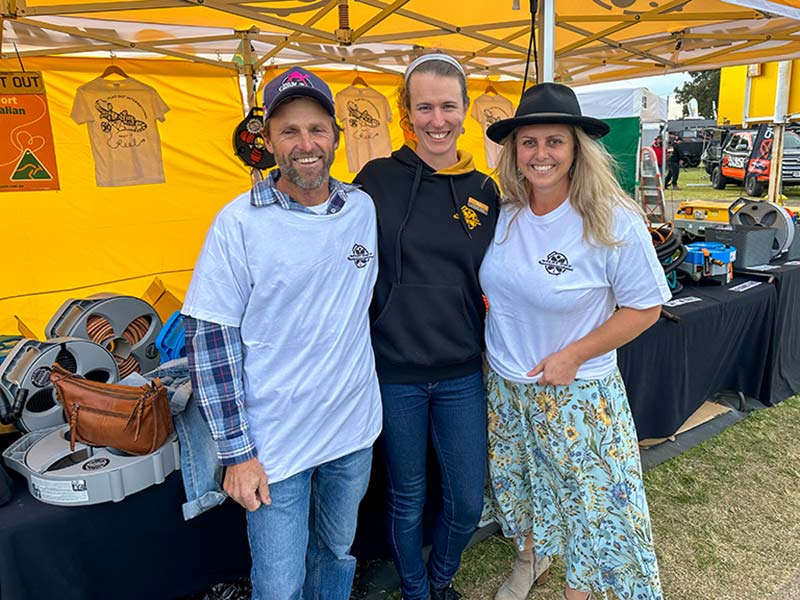
Zoe Van Mill of Flat Out International told us her story in hopes it would raise awareness of the issue of ‘passing off’, and offer a potential blueprint for other companies whose products may be facing similar market confusion.
First, what is ‘passing off’? Under Australian law, businesses may be protected against situations where another company presents a product or brand in a way that could create confusion with an established brand identity. It is designed to protect a company’s long-standing goodwill if a new product is presented in a way that may lead consumers to believe it is associated with another brand, thereby causing confusion for the consumer and harm to the original brand or company.
This brings us to the situation that Flat Out International faced when about a year ago, Zoe Van Mill, the company owner and director, was alerted by acquaintances to a product that had entered the Australian market that, in Flat Out’s view, looked remarkably similar to Flat Out’s products.
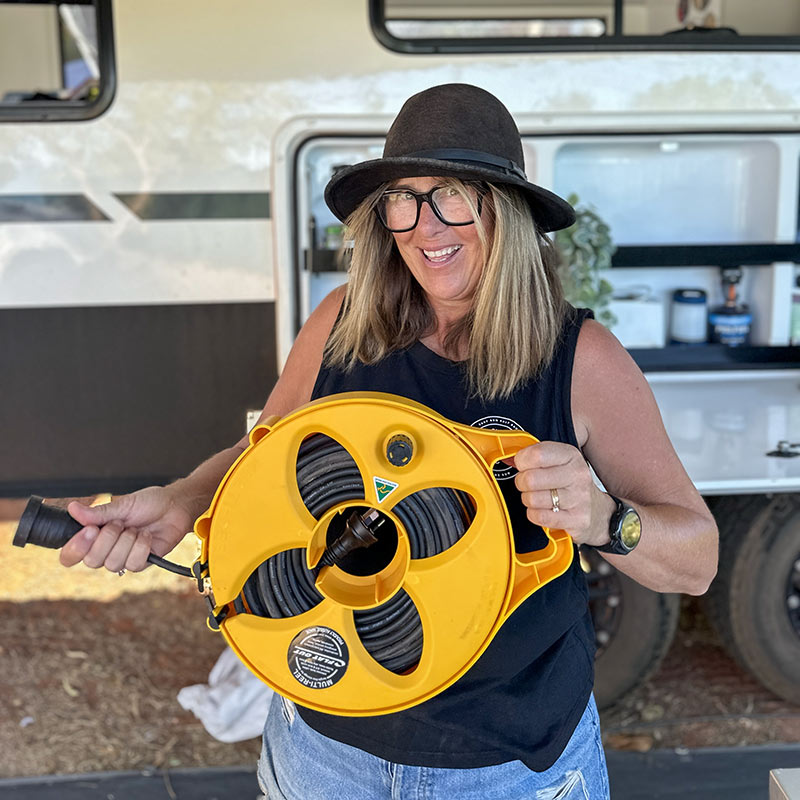
Flat Out is known for its lay-flat sullage hoses, flat drinking water hoses and electrical leads that are designed to wind effortlessly onto Flat Out’s well-known Multi-Reel. These products have been an indispensable companion for thousands of people travelling the country for more than 25 years.
“In photographs and from a front-on in-person view, it was nearly impossible to distinguish this new product from ours,” Zoe told GoRV. “However, upon closer inspection, we found significant differences.”
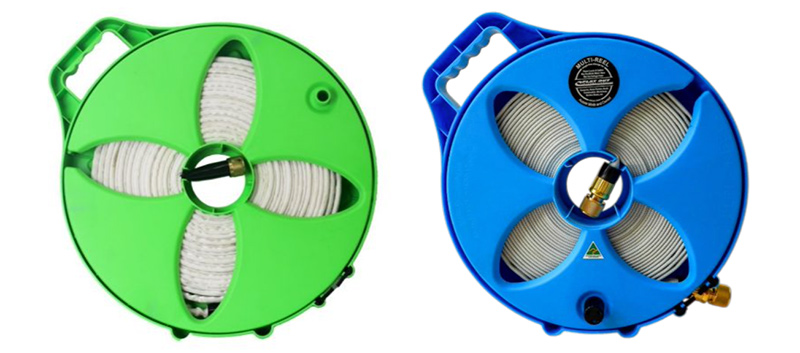
She said that the other reel was larger and the water hose had a smaller diameter, which may affect water flow, make the hose harder to flatten, and more prone to kinking. She said the larger size of the reel made it harder to store and the lack of a winder knob – as found on the original Multi-Reel – fundamentally changed how the product was used.
“Features that we carefully engineered to make life easier were not present in their version, which changed the overall experience” she said. “Ultimately, a consumer could buy this product believing they had purchased ours, only to find it did not work the way they expected. They could easily be confused by the similar appearance and then associate our brand with features and design choices that were not ours.”
POTENTIAL CONFUSION
Zoe believes that it’s possible the producers of the product believed they were legally entitled to create and distribute their own version.
“There is a common misunderstanding regarding intellectual property laws. While design registrations and utility patents eventually expire to ensure fairness and allow for market competition, which we support, this case was different. I am not suggesting we should be the only company allowed to manufacture a flat hose or a stackable cable reel system; competition often drives better products for the end user. However, we fought this specific instance based on potential confusion.
“As a single mum, running a small, family business, I did not have the capital to throw at legal fees. Yet, I made the investment because standing up for my beliefs is paramount. This happens all the time, has happened to many of my friends in the industry, so I was not only standing up for myself. It’s not okay for people to invest a lot of time and money to invent a concept, develop a brand following and build a community only for another company to create something similar looking that could be mixed up with the original. Because we believed we had legal grounds, I decided to take a stand.”
As Zoe said, her risk was high. Her solicitors warned that if the battle proceeded to court and she lost, it could cost the value of her home.
“Large companies often bank on the fact that small businesses cannot afford to fight. Thankfully, we managed to reach a settlement before the case went to court. While I haven’t recovered my legal costs, we secured an agreement that the other party would transition to a new design that is visually distinct from ours within a given time period.
“Doing what is right has always meant more to me than money. Ultimately, I fought to protect the end user. If a consumer buys a product thinking they are getting the version they saw elsewhere, only to later realise it’s not, they end up with an impacted experience. This does not just negatively affect our brand; it can leave customers disappointed after spending their hard-earned money on something that does not perform the way they expected. It is one thing to knowingly buy a different or lower-cost alternative, but unintentionally buying something different because of visual confusion is another matter entirely. This is why the protection against passing off is so critical.”
PROTECTING VISUAL IDENTITY
While patents protect how a product works, and design registrations protect how a product looks, passing off laws protect the visual identity that people associate with a brand.
A patent grants a temporary monopoly that will eventually expire for the betterment of market competition, whereas passing off laws protect a brand’s public image. For this to work, the shape in question needs be incorporated into that image. In Flat Out’s case, the shape of the Multi-Reel is embedded into its logos, packaging, image backgrounds, and even the ‘favicon’ on its website. The shape is an integral part of the brand’s public image.
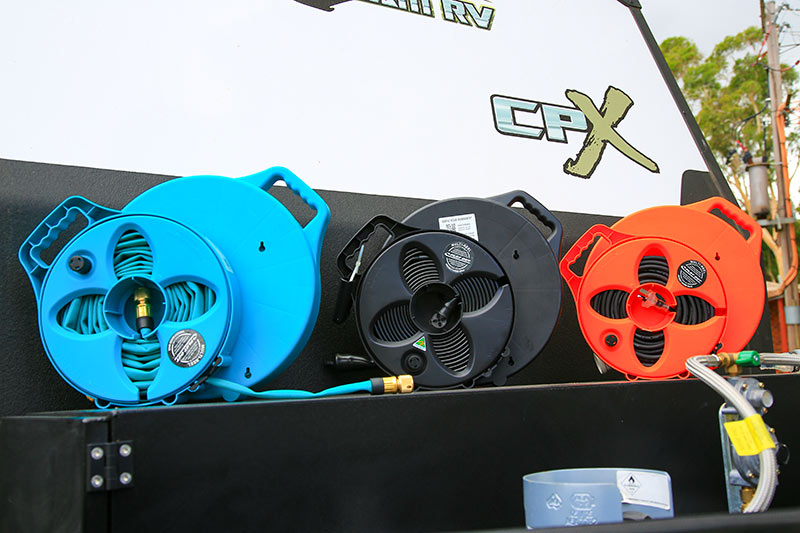
Zoe uses Coca Cola as an example. “The Coca-Cola bottle is a classic example of a shape that has become strongly associated with a brand and is protected accordingly. This is why we fought: the Multi-Reel shape is deeply ingrained in our identity.”
“We’ve already started helping others in the industry think this way and brand accordingly. Often, when people discuss a product with random people at a caravan park, they remember the convenience, the feeling, and the visual design before they remember the brand name. Visual markers are often recognised before text, which is why they can become such an important part of a brand.”
The message is that under Australian law, when set up correctly, a company’s public brand identity can be protected. These laws helped prevent a product Flat Out believed was too similar to the original Multi-Reel from being sold in a way that could confuse customers. Ultimately, it helped protect customers from purchasing a product they may have believed was a genuine Flat Out product.
But none of it was automatic. It only happened because the proprietor of the original company stood up, said ‘no’, and put her money where her beliefs were.
So yes, in some instances, imitation may be seen as a form of flattery. But in the real world, where imitation can place real pressure on livelihoods, it is encouraging to know there is a pathway to justice when a product is brought to market in a way that may confuse customers and undermine years of hard work. As we all know, that happens all too often.
CHOOSING TO BE BRAVE
Speaking up was not an easy decision.
For a small, family business, legal action is deeply personal. Every dollar spent on lawyers is money that could have gone into stock, staff, product development, or family. I was told very clearly that if the matter went all the way to court and we lost, it could cost the value of my home.

That is a terrifying risk to carry, especially as a single mum and a business owner responsible for a team. But staying silent would have carried its own cost too. In many ways, I felt stuck.
I thought about Flat Out’s late founders, Peter and Lenie, and the legacy I am now the custodian of. I fought for them. I thought about my son, and the future I need to keep building for him. I fought for him too. I thought about friends in the industry who have had their ideas blurred in the market and did not have the ability to fight. I felt it mattered to stand up for them as well.
The more of us who stand up for our principles, even when it is risky, the less likely these things are to happen in the first place. I have always tried to stand firm on my ethics and beliefs, but this one was harder than usual because the financial risk was so real.
At one point, I thought about what would happen if we lost. Then I realised that life is to be lived, and what is the point if we cannot live it in line with what we believe is right?
I did not take action because I wanted a fight. I took action because I believed it was the right thing to do.
My brother often calls me his ‘brave sister’. I haven’t always seen myself that way, but perhaps he’s right. I tend to take risks when there’s potential for growth, for change, or for something more meaningful to come from it. Maybe that is what bravery is. In this situation, at least, I’m glad I chose to be brave.
– Zoe Van Mill