
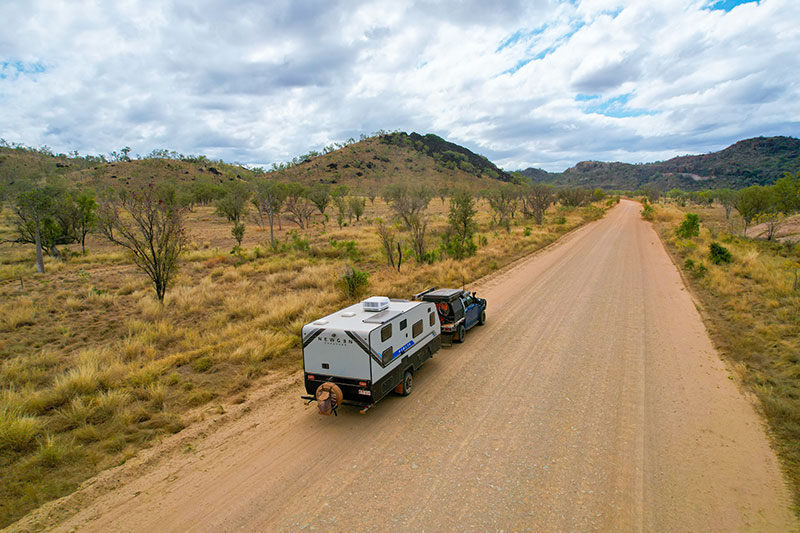
There are more to tyres than most would think, especially if you want to get upwards of 100,000km out of them. I have done just that, using a few different sets of tyres, and am sharing my experiences in how that all went.
It all starts with with a good set of tyres to begin with. Do your research and choose a set that suits your driving conditions. I always choose a reputable brand of all terrain tyre. This is because we do a lot of blacktop driving, as well as a lot of off-roading across many different terrains. Such terrain types include beach, sand, dirt, gravel, mud and rock.
Good maintenance is key for long-lasting tyres. Regularly getting a wheel alignment, rotating and balancing tyres helps them to wear evenly. A good practice is to do this at the same time as the vehicle service.
 Another good habit is to regularly check and adjust your tyre pressures to suit the load and terrain while travelling. Not only does this make a significant difference in tyre longevity, but it improves traction, comfort, and wear on other vehicle components. Regardless of the sort of terrain or load, and even if you adjust your tyre pressures, it is a great idea to have a tyre pressure monitoring system (TPMS) to keep and eye on tyre pressures and even temperatures while travelling. A lot of modern vehicles come with this feature built in.
OUR TYRE PRESSURE MONITORING SYSTEM EXPERIENCE
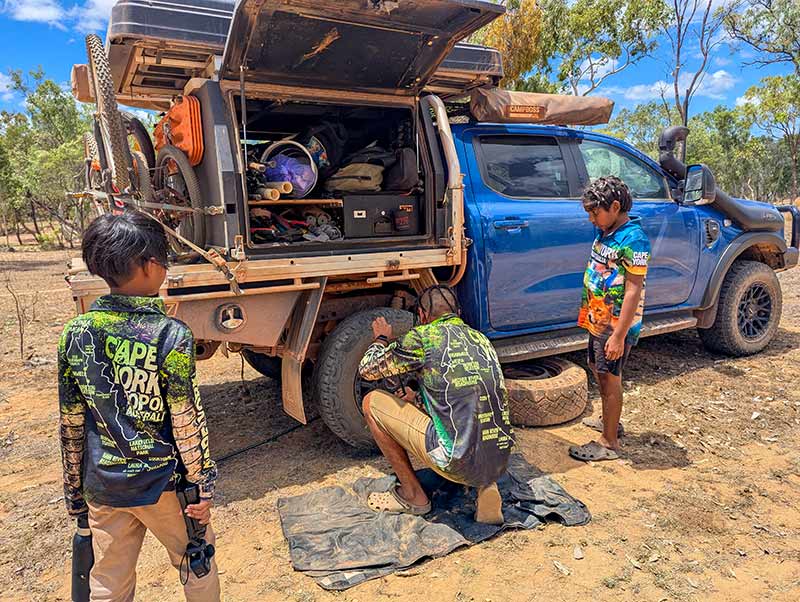
Our Ford Ranger has a factory-fitted TPMS; however, unfortunately it does not provide tyre temperature. This TPMS has previously, on two separate occasions, detected punctures in our tyres. The early warning was enough for us to be able to stop the vehicle before the tyre even went flat. If not for this early warning, there would be a good chance that the tyre would have heated up, from being under-inflated, and either caused damage to the tyre or, worse, a blowout. On both occasions we were travelling on remote dirt roads and a blowout would have been disastrous.
 Because the Ranger’s TPMS saving us twice, I found myself keeping an extra careful eye on our tyre pressures and I wanted to be able do the same for the caravan tyres.
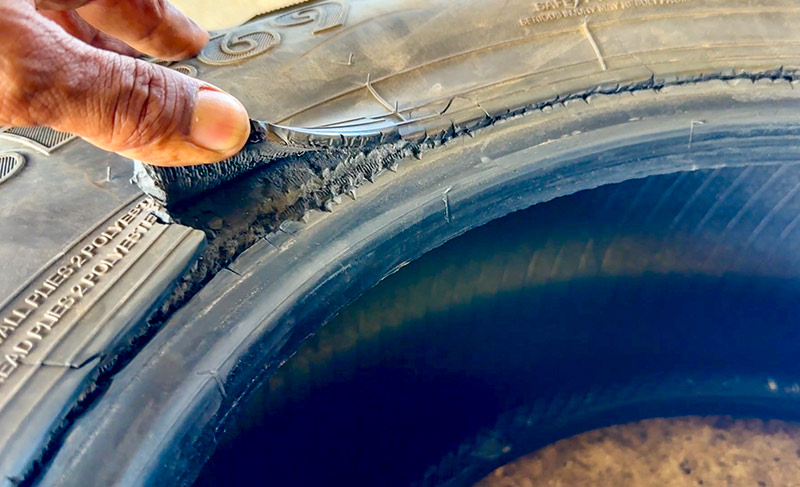
Our caravan is only a single-axle and a blowout would be far more dire than it happening to our tow vehicle or even a tandem-axle caravan. This thought was solidified into action when I woke up one morning to find the caravan on a big lean. Stepping outside revealed that one of the tyres was completely flat. A closer inspection revealed the tyre was damaged beyond repair. We were so fortunate this happened while we were parked up and not while we were travelling on the road somewhere!
Hitting the internet for a solution quickly revealed that there were many cost-effective after-market TPMS options. After doing some research on the available options, I eventually landed on the Oricom TPMS.
What sold me on this product was that Oricom is a well-known, reputable Australian-owned and operated company with local support. The product itself had good reviews, and the latest version had a compatible app, which is handy not only for monitoring the information, but to quickly make adjustments to the TPMS settings, such as setting the operating parameters of the tyres so that the system sounds an alarm if the tyres fall out of the parameters.
There are many variants available to suit different needs. I chose the six-sensor external system. It includes four sensors, one for each of the ute’s tyres and two for each the caravan’s tyres.
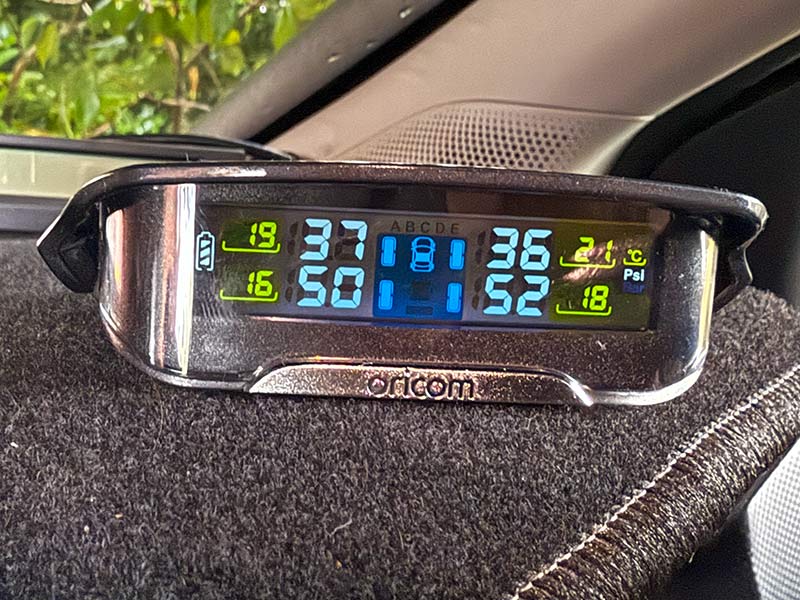
 The Oricom TPMS is easy to DIY, especially with the straightforward instructions. It is as easy as replacing each of the tyre’s valve caps with the appropriately labeled sensor and firing up the monitor to sync it all together. I leave the monitor on the dashboard, and its built-in solar panel keeps it charged up. It is small enough not to obstruct forward vision, and the display is large and bright enough to quickly read at a glance without being too bright to be annoying at night.
Once you start using a TPMS, you will discover that there is actually a lot going on with tyre pressures and temperatures. They are continually changing due to many external factors. Many experts say to follow the ‘4psi rule’. This implies that as the tyres warm up from cold to normal operating temperatures, the pressure should increase by 4-6psi, indicating the tyre pressures are correct.
Regardless of which brand you go with. I highly recommend some way of monitoring both the tow vehicle’s and trailer’s tyre pressures and temperatures. Now that we have the Oricom TPMS, I use that instead of the factory-fitted unit. It gives me more information and is easier to read.
– Elvin Pal