

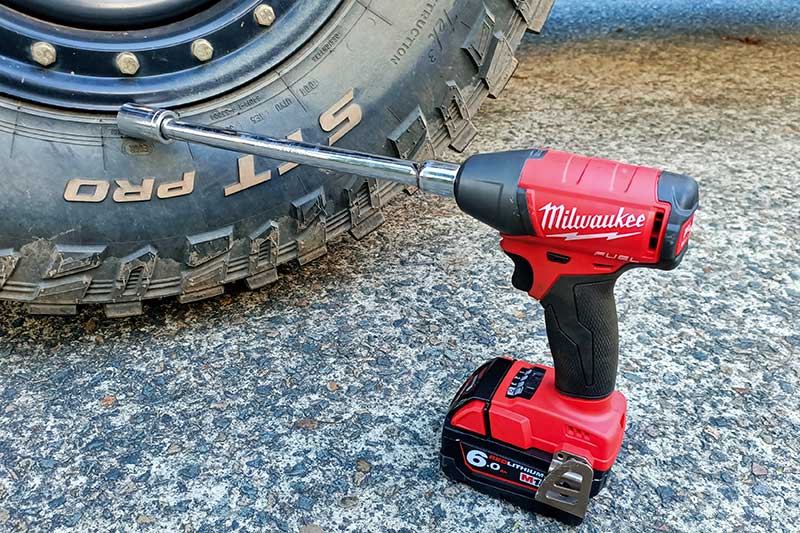
We all love the noise of a rattle gun. Kinda makes you feel like you’re a proper mechanic, or part of a touring car team in the pits or an old farm hack who is too lazy to swing an ol’-fashioned spanner.
Admittedly, the rattle gun or impact driver makes life faster and easier for removing and installing all manner of nuts and bolts. I use them often, but I also know their limitations and dangers.
REMOVING
Undoing nuts and bolts is okay solely with a rattle gun; you can’t do too much damage. Although, if a nut is well and truly seized, you might snap the bolt off. That then leads to a whole extra headache of how to remove a broken stud or bolt… we’ve all been there, and it ain’t pretty.
Having the ability to spin a nut off in the blink of an eye is both fast, easy, and, hey, let’s admit it, fellas, impressive to any other male bystander. He’ll surely think you’re a pro at all things mechanical from the noise it emits.
INSTALLING
This is the dangerous part of using a rattle gun. The job and danger start before the act of doing up the nut. Try inserting a nut into a socket and spinning it onto a bolt or stud with it cross-threaded. Go on, I dare you! It’s that initial threading that, if it goes wrong, sees you destroying the thread of that bolt and the rest; well, you may as well kiss the job goodbye and walk off in disgust while kicking a bootful of dust. It’s good practice to initially thread a nut onto a bolt with your fingers to ensure no cross-threading or damage is done to the bolt.
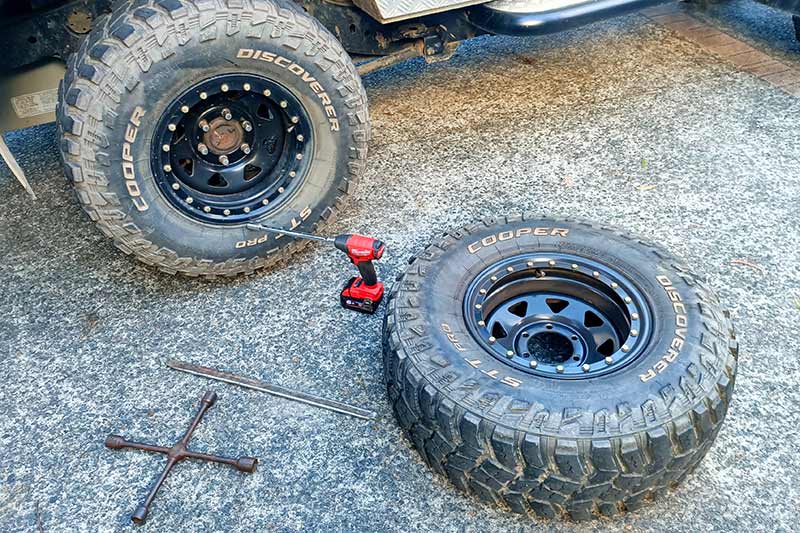
Sure, the initial fast and furious securing of the nut is the fun part, so go right ahead and spin those nuts as fast as your impact driver will allow.
The next dangerous part is how long you leave the rattle gun ugga-duggering until you back off the trigger. I’ll wager not many know the torque their battery-powered rattle gun can produce. Is three seconds of constant trigger pulling the equivalent of five hefty grunts on a 250mm ratchet handle by an 80kg hairy troglodyte? Or is it five, 10, or more seconds? Is that the equivalent of a 100kg muscle head or a 60kg lean ultra marathon runner?
I have no idea. I bet you don’t either!
My advice is to perform the initial threading by hand, then spin the nuts on with your impact driver until you feel resistance. Finally, complete the task using either a spanner, ratchet, or torque wrench, depending on the level of precision required for the job at hand.
WHEEL NUTS
This is one of the most common jobs I see people using their rattle gun for, whether in caravan parks, on the side of the road or at home. Removing and installing wheel nuts. As I’ve said, the gun makes the job quick and is sure to impress, but you’re really playing with danger if you don’t follow the basics, as mentioned above when reinstalling the wheel nuts.
Ya see, wheel nuts are not supposed to be overly tight. They have specific torque settings to ensure tightness, obviously, but also to prevent stretching the thread of the wheel stud. Yep, it’s a real thing; look it up in your vehicle’s handbook. Threads are designed to be tensioned or torqued to specific forces to ensure they do their job correctly and safely.
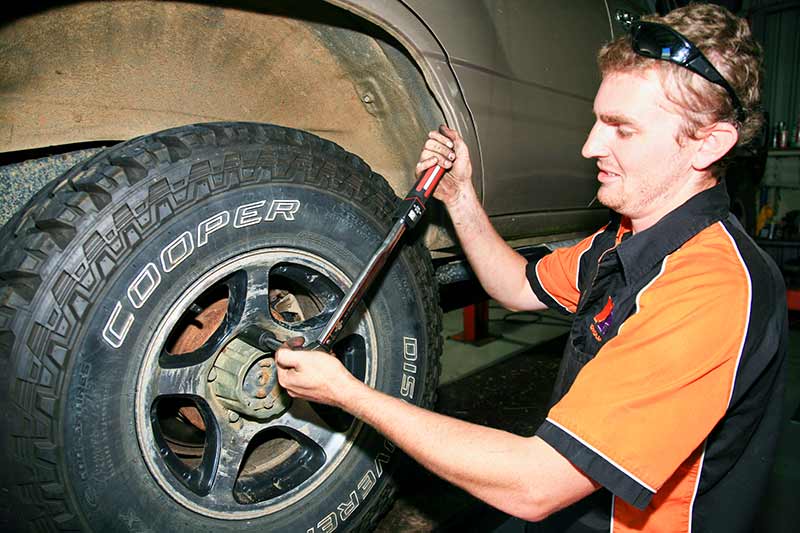
I’ll wager a wheel nut has come undone, or a stud has snapped from a caravan axle or tow vehicle while driving due to excessive forces applied while fitting a wheel nut too tight.
Yes, many tyre shops are unaware of the damage they cause by being overzealous with their rattle guns. Folk often find they can’t undo a wheel nut after a tyre shop has been heavy-handed on the tools; their tools are most likely going to emit more force than some battery-powered tools.
The best practice, which I’ve observed in a few tyre shops I’ve visited lately, is to perform the initial threading by hand, then use a rattle gun, and finally complete the job with a torque wrench set to the appropriate settings. That’s precisely what you should be doing trackside, in the caravan park or at home.
If you don’t carry a torque wrench while travelling, at least compare the effort required to meet the torque settings with your ratchet set, spanner or wheel brace at home so that you’re confident of being within cooee of what the wheel nut torque settings should be.
In the right hands and the right applications, a rattle gun is an excellent tool. In the wrong hands and the wrong place, the damage that can be caused is immeasurable.
Just remember; generally, for large-diameter and heavy-duty applications, you’re reasonably safe to go for it when undoing them. Think here: undoing seized or over-tightened wheel nuts or larger hardware. For tightening, sure, let that ugga-dugga sound out for a few seconds, but finish the job with a spanner, socket or torque wrench, depending on the application.
With smaller nuts and bolts, be very careful or avoid doing it altogether. Stay away from sump bolts and any smaller bolts that are threaded into thinner material. Do it the old-fashioned way and spin those spanners by hand.
IMKPACT DRIVERS: MARK’S WISE WORDS
Be careful with your choice and use of sockets. Standard chrome vanadium, or cheaper offshoots, are not designed for use with rattle or impact drivers, so you may well split the walls if used in heavy-duty applications.
Dedicated impact sockets are available for these applications. Invest in the correct, quality tools, and you’ll not only reap the rewards but also be able to pass them down to your kids; half of my old hand tools are from my father and grandfather.