
While Darwin’s waterfront, markets and laid-back tropical lifestyle are attractions in their own right, some of the Northern Territory’s most memorable experiences lie within a couple of hours of the city. From iconic wildlife encounters and crystal-clear swimming holes to coastal retreats and rewarding four-wheel driving adventures, these five experiences showcase a different side of the Top End.
JUMPING CROCODILE CRUISE
The Adelaide River looks almost peaceful at first glance, a broad ribbon of muddy water winding through floodplain country. Beneath that surface, however, lurks one of Australia’s most formidable predators.
Located around an hour from Darwin, the Spectacular Jumping Crocodile Cruise has been introducing visitors to the river’s famous residents for more than 30 years. Operating along the edge of Djukbinj National Park, the Indigenous-owned business offers an unforgettable opportunity to see saltwater crocodiles in their natural environment.
It does not take long before the first crocodile appears. Our guide, Henry, eases the boat into position and begins calling out names rather than numbers. These crocodiles are known individually by the crew, each with their own history and personality.
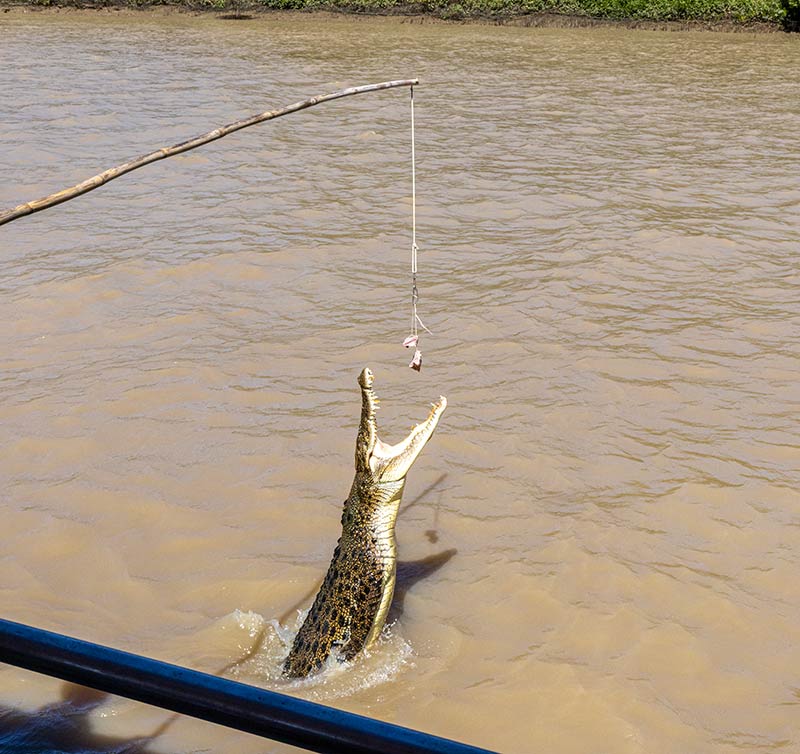
Marylou is the first to appear, her light-coloured head breaking the surface as she glides towards the boat. Then comes Stumpy, a 70-year-old crocodile missing a leg but still capable of moving his 4.5-metre frame with surprising power. The largest we encounter is Casanova, a 5.1-metre heavyweight that commands attention the moment he surfaces.
Spotting them is not always easy. The Adelaide River is often murky and deceptively calm. This time of year, with water temperatures below 28 degrees, many crocodiles can be found sunning themselves on the muddy banks, soaking up warmth before slipping back into the water.
Then comes the moment everyone is waiting for. A sudden explosion of muscle and speed sends a crocodile launching vertically from the water beside the boat. One second there is nothing but ripples. The next, several metres of prehistoric predator is airborne. It is over in an instant but impossible to forget. Current estimates suggest that about 1200 saltwater crocodiles inhabit the Adelaide River, and after an hour on the water that number feels entirely believable.
White-bellied sea eagles and whistling kites circle overhead while freshwater crocodiles and other wildlife occupy the quieter reaches of the river. Together, they serve as a reminder that this is not a staged attraction but a thriving Top End ecosystem where apex predators still reign.
BERRY SPRINGS NATURE RESERVE
After the adrenaline of the Adelaide River, Berry Springs Nature Reserve (about 50 minutes from Darwin) provides the perfect opportunity to slow the pace.
The benefit of staying nearby is simple: you can visit multiple times during the day, and each visit feels different. I stayed at the Lakes Resort Caravan Park, which is very handy to the springs. Morning light filters through the paperbarks, midday sunshine illuminates the clear water and late afternoon brings a quieter atmosphere as the crowds begin to thin.
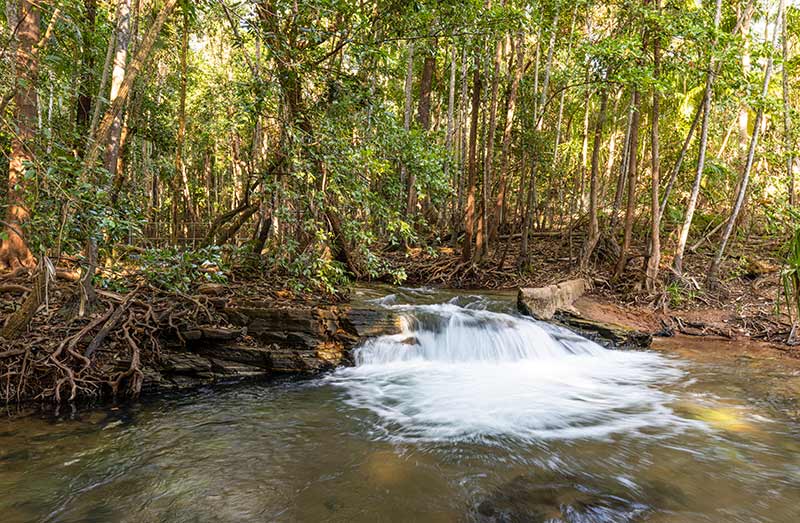
When open, the freshwater pools are among the most inviting swimming spots in the Top End. Families spread picnic rugs across the lawns bordering Berry Creek while visitors cool off beneath the shade of towering trees.
I was lucky enough to find a pool noodle left behind by another visitor and quickly discovered it was the perfect way to experience the pools. Floating gently downstream beneath the paperbarks, with nothing more strenuous required than occasionally steering away from the bank, felt like the ultimate Top End relaxation. If you’re planning a visit, I would strongly recommend bringing your own pool noodle.
There is more to Berry Springs than swimming, however. The 1km Water for Life Walk loops through part of the Berry Creek catchment, combining compacted pathways and boardwalks as it winds through monsoon vine forest. Taking about 30 minutes, the easy walk highlights the intricate relationships among the plants, animals and waterways that sustain this unique environment.
History is also woven into the landscape. During World War II, Berry Springs formed part of a rest and recreation camp for troops involved in the defence of Darwin. Relics from that period can still be found around the reserve, providing a tangible link to the region’s wartime past.
The reserve is also a place of cultural significance. The Kungarakan people, Traditional Owners of the area, welcome visitors while reminding them of the importance of respecting Country and the stories connected to this special place.
Whether you are floating in the cool water, enjoying a picnic beneath the trees or exploring the walking trail, Berry Springs offers a quieter side of the Top End that is impossible not to appreciate.
TERRITORY WILDLIFE PARK
The Territory Wildlife Park offers one of the best introductions to the animals and habitats that make the Top End unique. One of the easiest ways to explore is aboard the park train. Departing from the main station, it loops between the major attractions, allowing visitors to hop on and off throughout the day. Trains arrive roughly every half hour, making it easy to explore at your own pace. You can also follow the walking trails, or do what many locals do: ride your bike.
Our guide, Jay Richard, brings real depth to the experience. Extremely knowledgeable and clearly passionate about the Territory’s wildlife, she transforms what could be just a visit to a collection of exhibits into a deeper understanding of the ecosystems that support it.
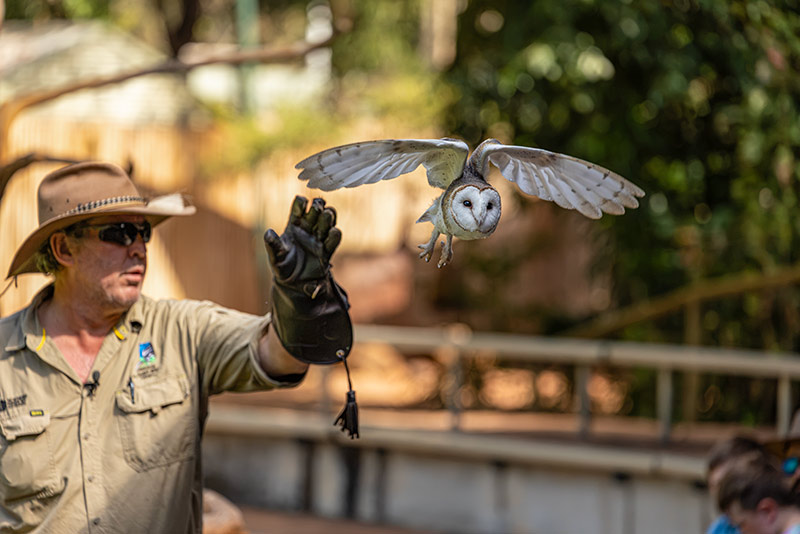 One highlight is the popular Flight Deck presentation. Watching the birds soar overhead and demonstrate their remarkable abilities is impressive, but what makes the experience particularly enjoyable is that the presentations still allow the animals to display many of their natural behaviours rather than simply performing on command.
While the Flight Deck was exciting, getting up close and personal with three of the park’s buffalo was equally memorable. Standing near these enormous animals provides a fresh appreciation of their size and strength, and offers a reminder of the impact buffalo have had on the Northern Territory’s landscape, history and economy.
Bird aviaries, woodland habitats, freshwater displays and nocturnal exhibits each reveal a different aspect of life in the Northern Territory. It is a place where visitors can gain a greater appreciation of the species they may encounter while travelling throughout the region.
For anyone wanting to better understand the landscapes they are exploring, the Territory Wildlife Park provides an ideal starting point.
CRAB CLAW ISLAND RESORT
The final 14km into Crab Claw Island Resort are enough to make you wonder what awaits at the end. The dirt road is dusty, often corrugated and includes a shallow water crossing that quickly reminds you that suburban Darwin is well behind you. Once you pass the airstrip, you know you are almost there.
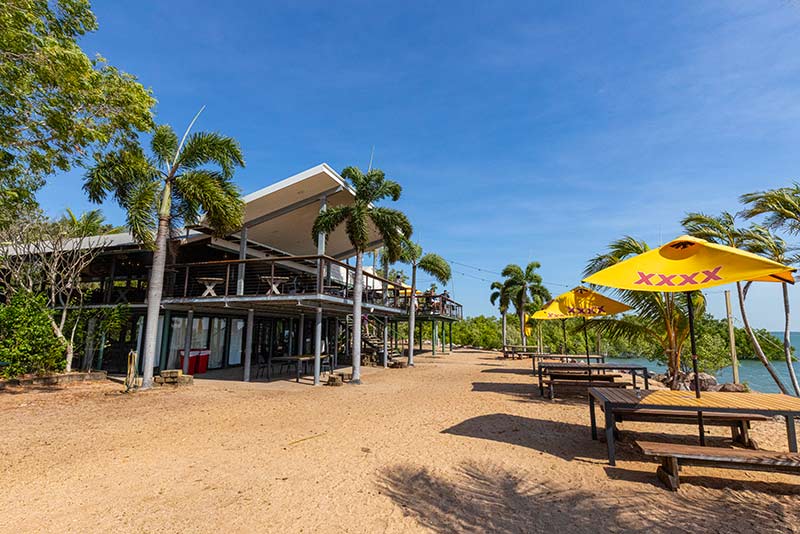
What awaits is not a polished resort packed with organised activities. Instead, Crab Claw Island delivers something increasingly rare: an authentic Top End escape where fishing, boating, wildlife and simply slowing down are the main attractions.
Assistant manager Frankie has been welcoming guests here for almost four years and believes the island’s appeal lies in what it has not become.
“It’s more like an experience than a normal getaway,” he says. “It’s more like a little fishing village retreat than a resort.”
That authenticity is immediately apparent. Powered sites sit within easy reach of the waterfront, cabins face the water, and the pace of life slows to match the rhythm of the tides.
One of the highlights of my stay was joining a helicopter flight with Airborne Solutions over the surrounding islands. Within minutes of lifting off, the coastline unfolded beneath us in a patchwork of turquoise water, mangrove-fringed channels and scattered islands.
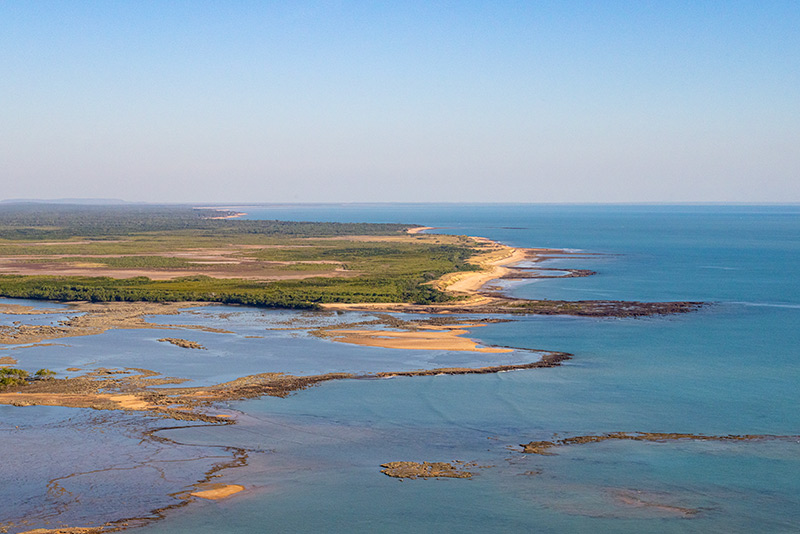
From above, we spotted crocodiles basking along the shoreline, turtles cruising through the shallows and sharks patrolling the clear water below. Watching water spill from the reef on the falling tide was a reminder that some of the Top End’s most spectacular sights can only truly be appreciated from the air.
Back on the ground, the food deserves special mention. The menu is well considered, and everything I sampled was packed with flavour, but the standout was undoubtedly the Malaysian seafood curry. Rich, fragrant and deeply satisfying, it was the kind of meal that lingers in memory long after the trip itself.
Crab Claw Island is not a destination that demands a packed itinerary. It is a place to disconnect, spend time outdoors and experience a slice of the Northern Territory that remains refreshingly unchanged.
MARY RIVER NATIONAL PARK: HARDIES TRACK
For travellers keen to swap swimming holes and sightseeing for a genuine taste of Top End four-wheel-driving, Hardies Track in Mary River National Park is well worth pointing the bonnet towards.
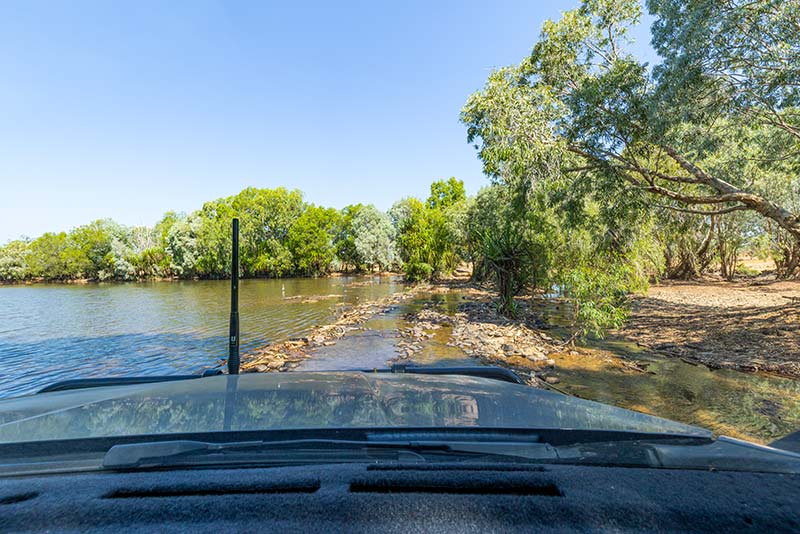
Accessed just 5km west of Mary River on the Arnhem Highway, the track is only open during the dry season and offers a rewarding mix of challenging terrain and classic floodplain scenery.
Wheel ruts, creek crossings and washouts keep drivers engaged from the outset. Some ruts are deep enough to test both clearance and wheel placement, while creek crossings provide the perfect excuse to stop, assess conditions and take in the scenery before continuing on.
What makes Hardies Track special is the landscape it passes through. Paperbarks line the waterways, floodplains stretch to the horizon, and birdlife appears around almost every bend. Every crossing looks like a postcard, but this is also serious crocodile country. The still waters and muddy banks are a reminder that the Top End’s apex predators are never too far away.
The track is not particularly long, but that is part of its appeal. It delivers enough challenge to be enjoyable without demanding an entire day behind the wheel, making it ideal for visitors looking to experience a taste of Top End four-wheel-driving.
The nearby Bark Hut Inn makes an excellent base while exploring the area. Conveniently located on the Arnhem Highway, it provides comfortable accommodation, meals and a cold drink at the end of a dusty day. Rather than rushing back to Darwin, staying overnight allows more time to enjoy Mary River country and the surrounding attractions.
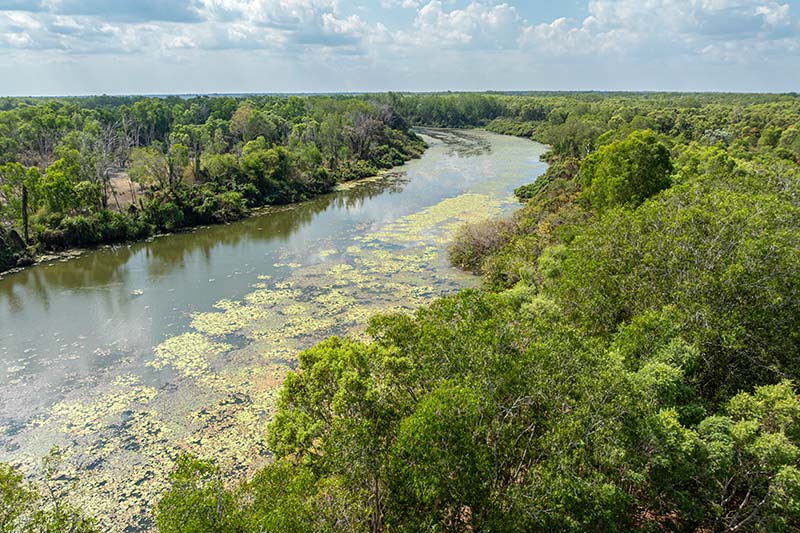
This was a cracking drive, and the D-Max was in its element. The combination of rutted tracks, water crossings and constantly changing scenery provided exactly the sort of experience 4WD owners travel to the Top End in search of.
By the time I rolled back onto the bitumen, the vehicle wore a coating of red dust, the mirrors were splattered with mud, and the grin across my face said everything. Hardies Track may not be the most famous 4WD route in the Northern Territory, but it is certainly one of the most rewarding close to Darwin.
JUST DOWN THE TRACK FROM DARWIN
The beauty of these experiences lies not in their remoteness. It is that they are close enough to reach in a day, yet far enough to feel like you have discovered a different Territory altogether.
Whether you are watching a crocodile launch from the Adelaide River, floating beneath the paperbarks at Berry Springs, spotting wildlife from a helicopter above Crab Claw Island or kicking up dust on Hardies Track, the reward lies in leaving the city behind.
Darwin may be the gateway to the Top End, but some of its greatest adventures begin just down the track.