
There are plenty of iconic drives through our outback that follow explorer routes, but I reckon this Darling River exploration is just as iconic.
The Darling River, the third longest river in Australia, is well known for various reasons, from its poor health and management in recent times back to hundreds of years when the Barkindji people lived along its systems. Our early explorers followed the river and used it as a base when seeking out new pastoral land. In later times, the river was used as a transport system.
Without water, expeditions couldn’t move forward or survive, so by following and using the Darling, they could expand into areas that hadn’t been mapped out.
I’ve done this drive a few times and it never disappoints. This time, our starting point was in the beautiful town of Bourke, NSW. Charles Sturt passed through the area just before 1830 when he was looking for the inland sea. He quoted in his log that the area would be unlikely to become the ‘haunt of civilised man’. But he was very wrong.
Over the next few years, the area grew and and the river was used intensively for trade. In 1880, Bourke was the transport centre for south-west Queensland and western New South Wales, with bulk wool being transported down the river each year.
BOURKE TO GUNDABOOKA
These days Bourke is still a hub for travellers to top up with food and fuel before hitting the dirt, but also to explore the history around town. Theres plenty to see and do, including the Darling River wharf system, the centre lift bridge, outer stations and the majestic buildings with heritage listings in the main part of town.
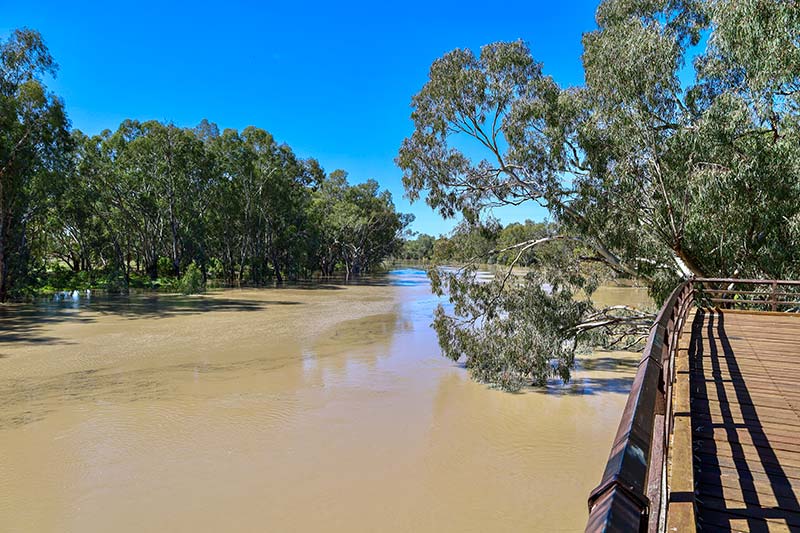
Heading south from Bourke along the Darling River Road, we crossed through the stunning Gundabooka NP where there’s options to explore remote campsites, hike out to Mt Gundabooka or even camp beside the river at nearby Yanda campgrounds with beautiful river gums lining the Darling.
Sign-posted about 10km out of Gundabooka, right beside the road, is an important marker where, in 1829, explorers Charles Sturt and Hamilton Hume discovered the Darling. The info board has some interesting insights as to what happened here.
Our first stop was to check out Louth, about 100km downstream from Bourke. It’s here that Henry Lawson wrote poems about drinking and partying, especially when the only service here was the pub that was a stopover for Cobb & Co coaches plus the river trade back in the late 1880s.
Today, it’s still a great place for a stop-over, with Shindy’s Inn right on the riverbank, and when the races come to town there’s plenty of partying. Inside Shindy’s, the walls are packed with interesting items from decades gone by, pictures of massive floods and a few quirky tools.
Don’t forget to visit the local cemetery where theres a 7.5m granite monolith known as the Shining Headstone. Built by Thomas Matthews, who loved his wife so much that he had this cross made, and it’s positioned in a way that on the anniversary of his wife’s death, the reflected light from the cross shines to the house where they once lived.
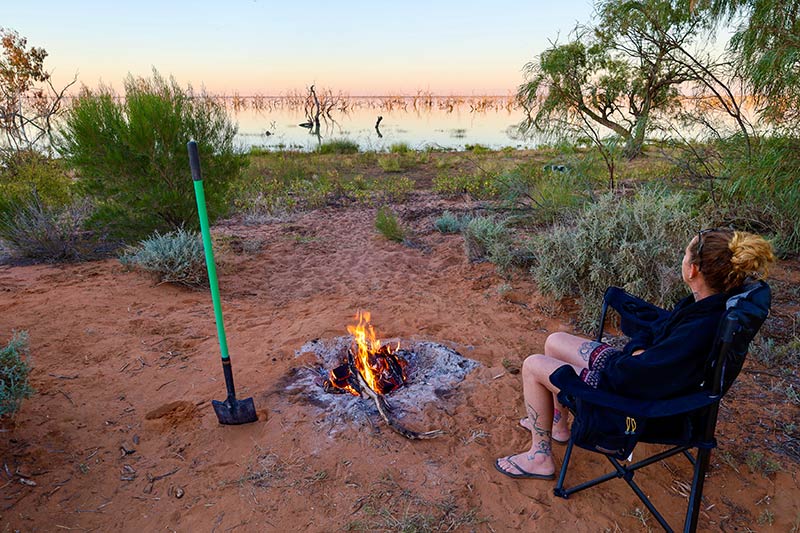
There’s plenty of camping here or at nearby stations, but with the slow flood that the Darling was creating, we decided to head further along.
TILPA AND WHITE CLIFFS
During most of the year, the roads along the river are in pretty good nick, but when it does rain they get closed sooner rather than later because these aren’t just any outback roads – these are local roads to stations and services.
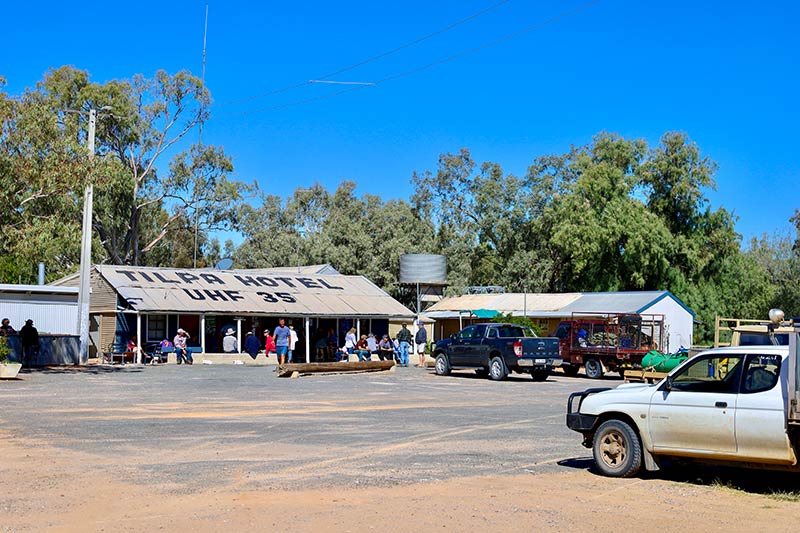
Tilpa, located on the western side of the river, is a must-do for anyone in the area. This pub is one of those iconic spots where the beer is always cold, the meals are huge and for a donation that goes to the RFDS you can write your name on the inside walls – that’s if you can find a spot!
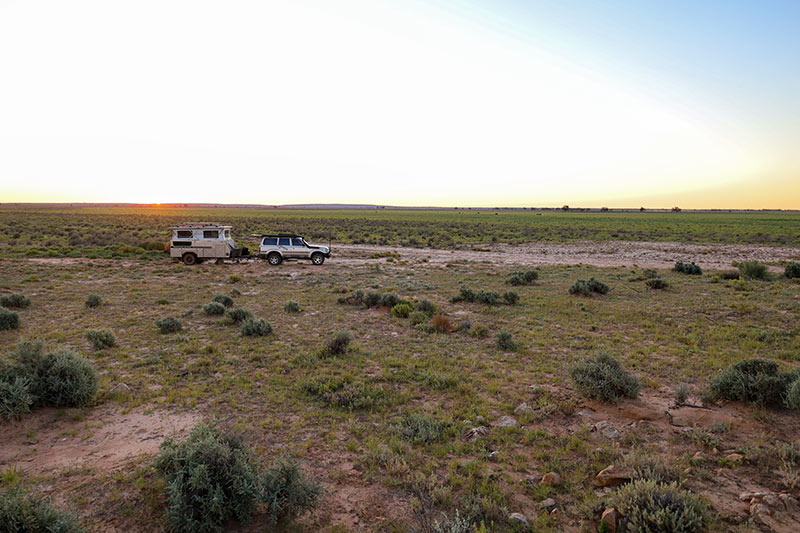
Established in 1894 as another service stop for the shallow draught paddle steamers, Tilpa is now home to the shortest heritage walk in Australia. Luckily, it’s just across the road from the pub so you won’t get too thirsty. Our plan was to originally head all the way down the Darling and follow the flow from recent rains in far north New South Wales but we decided to head across through the Paroo Darling floodplain to White Cliffs before the area was shut by the flood water moving south. It’s alway a good run west across the plains – it generally only takes a couple of hours.
White Cliffs has been a significant opal mining settlement since the late 1880s. Today, it thrives on tourists coming to explore the area and perhaps finding a fortune in opal-bearing rocks that date back 100 million years ago when this area was covered by ocean.
More often than not, this doesn’t happen but it’s a pretty cool place to visit.
The town is surrounded by a pockmarked landscape with over 50,000 disused mines. There’s a heritage trail around the mines and town where you can discover the old buildings, crazy and unique shanty mine dumps, and it even highlights areas where you can fossick for free. Mind you, it gets bloody hot here in summer and that’s why the locals live underground, where the daily temps are pretty stable.
Local Aboriginals never settled here for that reason (plus, there’s no permanent water) but they did pass through on their way towards the Darling River.
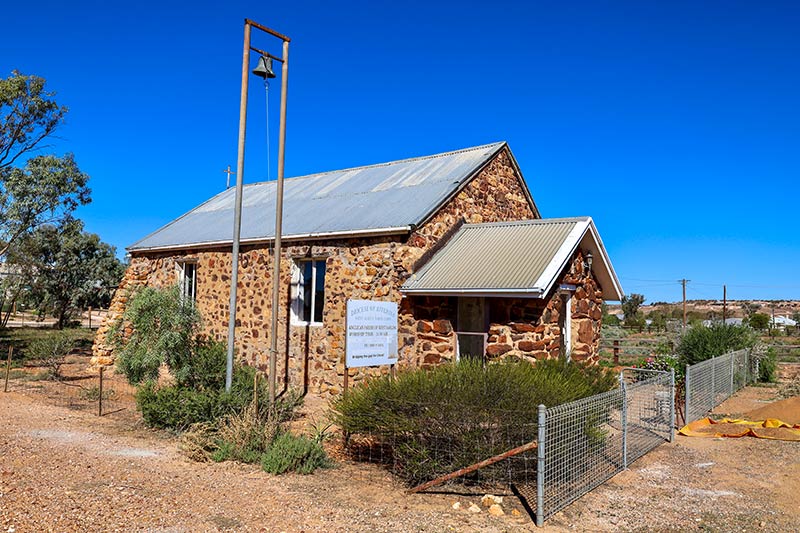
White Cliffs built its own power station in 1981 that generated power from the sun using 14 dishes measuring 5m in diameter. With the sun’s heat boiling water and creating steam, it powered an engine and generator for the town’s power. It was eventually closed but in 2006 it was recognised as the world’s first solar power station and is now Heritage-listed.
WILCANNIA
After a few days spent in White Cliffs, we headed to Wilcannia. Once a major port along the Darling River, this town has Heritage-listed buildings along the banks and through the town centre. When the paddle steamers came from South Australia, Wilcannia was deemed extremely important, soon becoming the third largest port on the river.
Included in the trail is the Wilcannia bridge, built in 1896. While this restored bridge is closed to car traffic, it is open to pedestrians. It is one of only two remaining on the river.
The bridge opened in the centre to allow paddle steamers to continue up and down the river. These bridges were a technically sophisticated structure when built in 1889. They required two men to wind a pulley mechanism to lift the spans – but this was later modified in 1913 so that only one person was required to operate it.
Today, it is recognised as being of state significance, as it contributed significantly to the social and commercial development of north-western New South Wales and opened up the ‘back country’ in the late 1800’.
SOUTH ALONG THE DARLING RIVER
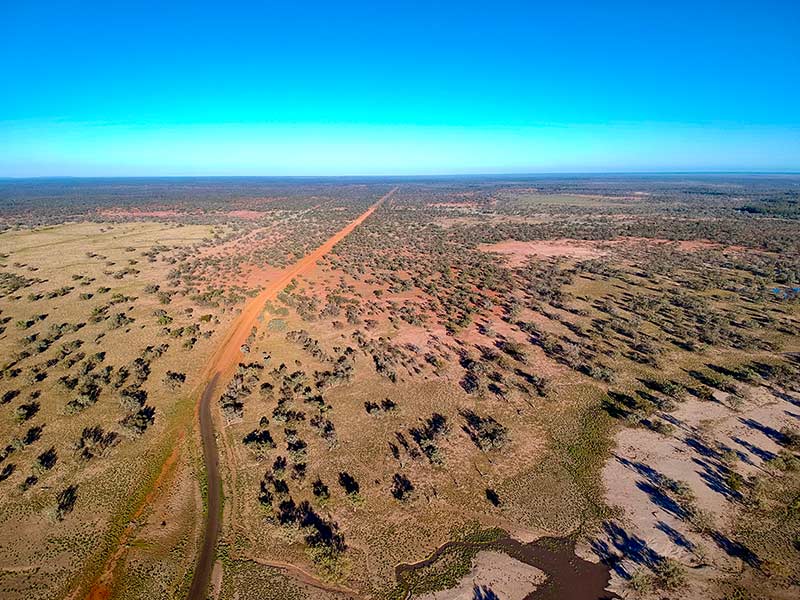
The final stint of our trip was to continue southwards along the Darling towards the Menindee Lakes, 150km away. With high rainfall some months before my visit, water was flowing freely into the four lakes after being dry for many years.
Life was returning back to the lakes. We were staggered to see the amount of water in the lakes covering land for as far as we could see.
Early explorers made this area their first port of call when travelling from Adelaide as it was a guaranteed water source where they could refill and rest for a few day before heading into the extreme country to the north. The first recorded Europeans that used this area as a lifeline was in 1835 with expeditions that included Sturt, Mitchell and the infamous Bourke and Wills trip.
The whole area has a fascinating and inner beauty to it. Whether you’re into history, the outback way of life, or just want to tick off another iconic drive, the Darling River will never disappoint.