
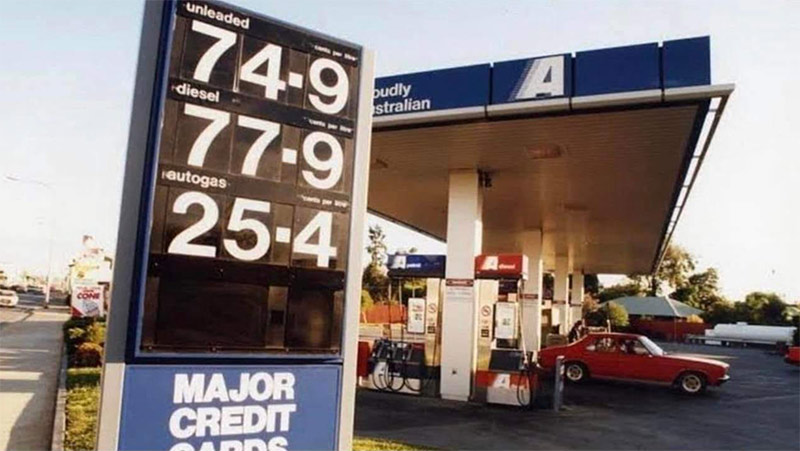
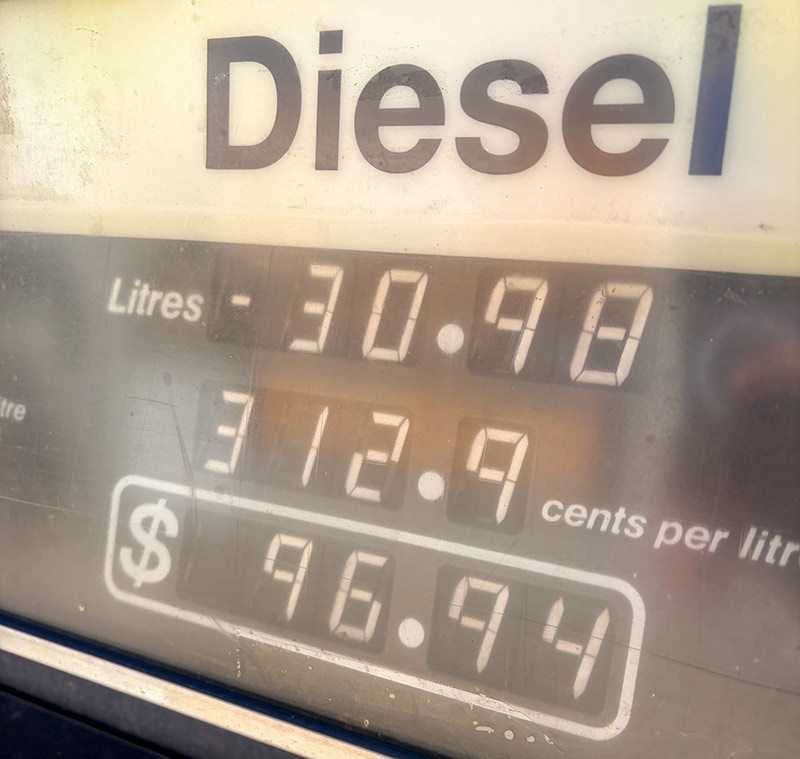
Do you remember the days when fuel cost 0.69 cents per litre? By the late 1990s, however, we were all enraged by fuel that cost 0.90 cents per litre. Whatever happened to those days and those prices? I don’t pretend to be an expert on global oil markets, but it doesn’t require expertise beyond basic critical thinking skills to realise the caravanning lifestyle – and industries and activities well beyond – have been dealt a severe blow in recent times.
I’m angry, and I suspect you are too. None of this was necessary, and every consequence we’re being forced to endure was entirely foreseeable, though two corrupt political leaders in both Washington DC and Tel Aviv seem wilfully blind to both consequence and morality, provided they get the destruction and distraction they crave.
Now that I have that off my chest, how will this crisis impact caravanning in Australia? We know it’s virtually doubled everyone’s fuel bill overnight, but will price rises and fuel supply uncertainty affect self-drive tourism in Australia? The short answer is yes, though opinions differ to the extent and to the opportunities that exist in these crazy times…
REDIRECTING TRAVELS
I spoke with Stuart Lamont, the CEO of Caravan Industry Association of Australia for his big-picture perspective. His organisation is at the tip of the spear in terms of lobbying the federal government on behalf of the RV and holiday park industries, helping to shape policies that affect us all. His take is on the optimistic side, noting that for now, it appears that Australians haven’t halted their travels en masse; rather, they are redirecting their travels, opting for destinations that are closer to home. This bodes poorly, however, for the annual grey nomad northern migration.
This winter, the Caravan Industry Association of Australia expects that vanners based in the south will chase the sun in less northern latitudes, such as the mid-north coast of New South Wales. The affects on tourism up north are already being felt, Mr Lamont said.
“There are caravan parks that are absolutely bleeding and will have a horror winter, but there will be others that have a great winter as people redirect their travels,” he said.
That said, there are pockets within the Australian RV industry that are holding their own.
“I’m not going to sugar-coat it and say it isn’t tough out there, but it is now a different market and manufacturers and dealers will need to work harder for their deals,” he said.
But it’s also a buyer’s market, which means opportunity for savvy customers. However, the uncertainty is likely to benefit the bigger players – manufacturers who can afford to heavily discount their products and perhaps offer a psychological certainty that the smaller players can’t.
What about the cost of caravans? After all, it isn’t just the global fuel supply that’s been impacted but products derived from oil/petrol, such as plastic, too.
Mr Lamont believes it’s too early to tell, though as Australians stare down the barrel of impending interest rate rises, there is going to be a consolidation of the RV marketplace in the coming months. After all, this country is home to hundreds of RV manufacturers in a discouraging economic environment. While the cost of caravan construction is going to increase, it’s feasible that many manufacturers will seek to avoid passing those costs to their customers as much as possible in order to remain competitive.
He said, too, that some manufacturers continued to function at post-covid boom levels, with scope to scale back operations in line with reduced demand.
“People don’t want to downsize their businesses, they want to grow them, but now is the time where people have to be cleverly investing in marketing and R&D, and looking at some of the overheads that crept in during the post-covid boom.”
He views the months to come as a ‘re-setting’ period for the industry in which the strong and the savvy will find a way forward, while less-resourced or less-well-managed RV manufacturers will fall by the wayside.
At the time of writing, he said there was plenty of anecdotal evidence showing customer interest remained in various sectors of the market, though economic uncertainty was understandably making it difficult to convert that interest into sales.
Ultimately, while being clear-eyed about the challenges ahead, it was the lack of certainty – from fuel supply to fuel prices, and questions as to whether the manufacturer would go broke before delivering the customer’s van (which we’ve seen before) – that was the real problem, Mr Lamont said.
“The industry booms in times of certainty. Even if diesel prices stay at $3 per litre post-war, things will settle because certainty means people can plan and have confidence in the market,” he said.
‘MASSIVE TROUBLE’
That’s the dispassionate, rational perspective of the CEO of the van and holiday park industry’s national body. But the concern circulating within the industry right now is very real.
I spoke with Shaun Noble, the co-director of Goldstream, who quickly confirmed that the situation – at least from his perspective – was dire.
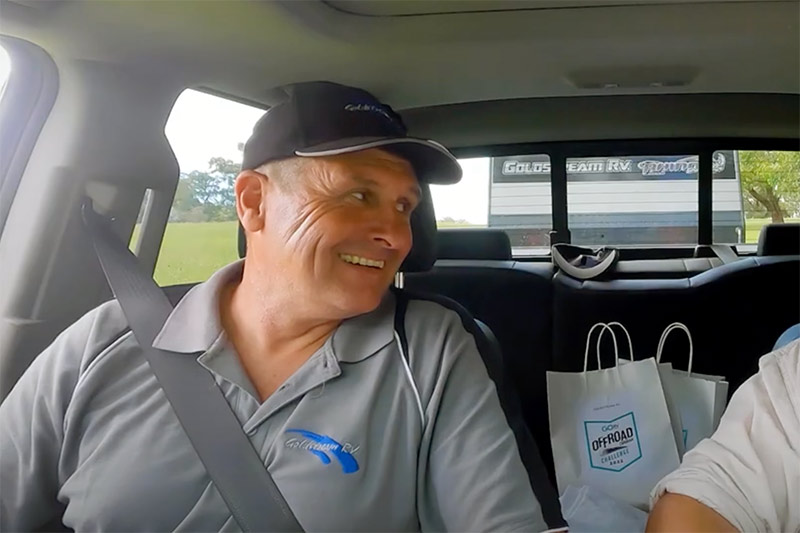
“It’s stopped dead,” he said of customer enquiry – not just to his business but the businesses of his industry colleagues. “There are companies that I know of that are in massive trouble. There’s just no one to sell to at the moment. I reckon I could put a $100,000 van on the lot for $50,000, and it wouldn’t sell. It isn’t even about the price – there aren’t even any bargain hunters out there.”
That said, Mr Noble feels confident in the future of Goldstream. Having scaled the business to cope with the post-covid demand, and then restructured when that boom faded, he is nonetheless concerned that this moment has the potential to do serious, lasting damage to Australian manufacturers over the next one to three years.
“There are still customers out there, but at the moment it’s a bit like trying to catch a snapper in Port Phillip Bay in winter – they’re out there, but most have moved on,” Mr Noble said. “Right now, you want the gods on your side.”
CLOSELY MONITORING
Crusader Caravans has grown into one of Australia’s largest caravan manufacturers. CEO Serge Valentino is clear-headed about the issue, but the business has the ability to adapt to the challenges to come.
“We’ve been manufacturing caravans for close to 25 years now and have very sound and sustainable business practices in place,” he told GoRV. “This vast experience at an operational and board level, underpinned by solid financial backing, helps us navigate through challenging times like these. Our current order intake remains strong, which is very pleasing – we are thankful for the continued trust our customers place in us.”
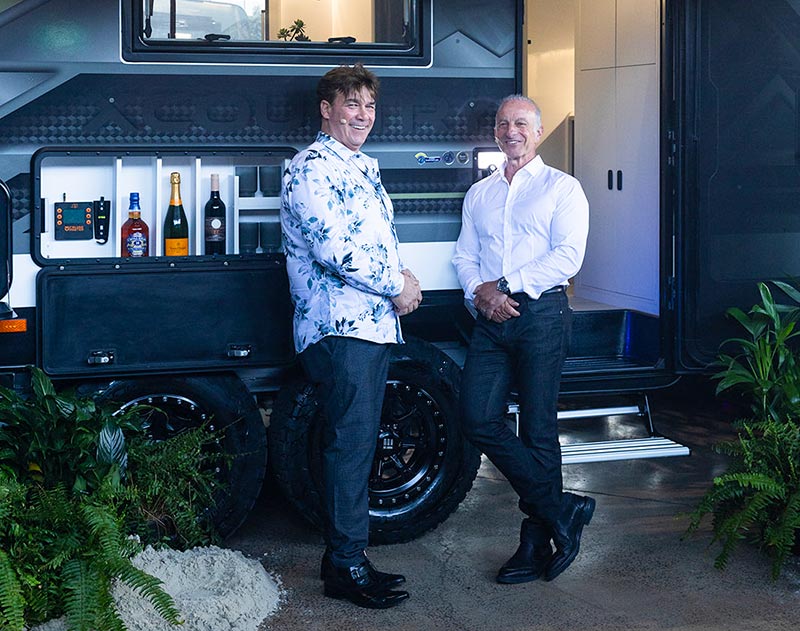
He did acknowledge, however, the ‘lag effect’ – it takes time for the results of geopolitical and even local issues to fully reveal themselves.
“We monitor all aspects of our operation forensically, through a historical and forward-looking lens, and we are able to adjust our business in real time to cater for the prevailing market conditions. Thankfully we are seeing a steady flow of foot traffic at our 15 dealerships across Australia.
“We also see the current fuel issue as an opportunity to reach out and support our customers, so we’re offering a free ‘fuel efficiency health check-up for a limited time to all Crusader and Dreamhaven customers. We encourage our customers to book this check-up with the same Crusader/Dreamhaven dealer they purchased their van from.
“We will continue to do all we can to help. Like many challenging times now behind us, we believe this too will pass in time.”
In terms of price increases, Crusader is currently absorbing increased costs for parts and transport.
“However, I am sure people would appreciate this is a situation largely out of our control. At this stage, we will continue to closely monitor the situation. While we strive to maintain price stability, I would suggest that anyone thinking about buying a new Crusader caravan to do so now at current pricing,” Mr Valentino said.
‘SMART TOURING’
In response to the fuel crisis, Crusader Caravans is advocating for a ‘smart touring’ approach – a combination of engineering and strategic trip planning to maximise every tank.
Crusader Caravans CEO Serge Valentino said that while fuel prices were largely out of travellers’ control, caravanners could still stay ahead with smart planning.
“When fuel supply tightens, regional and remote areas are often impacted first. So you need to plan tour trip well. Monitor fuel prices and availability in real time using apps like Petrol Spy and FuelMap. Stay connected with your fellow caravanning community for updates and always map out at least one back-up fuel station along your route.”
Mr Valentino recommended the ‘half-tank rule’ to avoid being caught out in remote areas. “We recommend never letting your tank dip below 50 per cent in remote areas. This provides a vital safety net if a planned stop is facing an outage or a price spike,” he said.
He said that while fuel prices were largely out of travellers’ control, efficiency remained firmly in their hands. Driving between 90 and 95km/h was often the most fuel-efficient ‘sweet spot’ for towing, noting that reducing speed by just 10 km/h could lead to drastic savings over a long haul, he said.
Mr. Valentino also suggested avoiding sudden acceleration and switching to manual throttle control on hilly terrain to prevent the unnecessary engine revving sometimes caused by cruise control.
“We also encourage travellers to look at their aerodynamics. Keeping external accessories streamlined and using wind deflectors on roof racks helps divert airflow, reducing the drag that forces engines to work harder,” he said. “Efficiency isn’t just about the drive; it’s about the destination. By adopting a ‘basecamp’ approach – setting up the caravan once and exploring the surrounding region using only the tow vehicle – travellers can drastically reduce their fuel spend.”