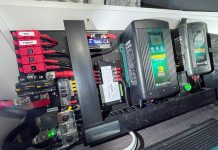

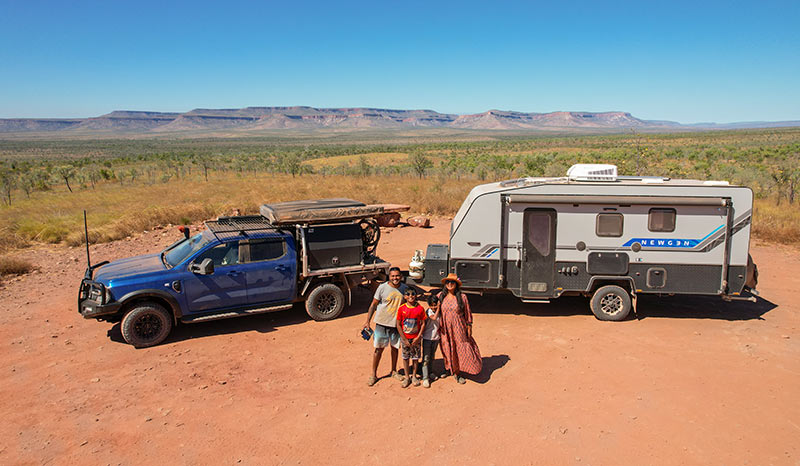
Having caravanned around Australia for more than seven years, we have seen electrical setups becoming bigger and better at a phenomenal rate. From entirely electric caravans that eliminate the need for gas appliances, to systems utilising 24 and 48V.
All of these systems are great; however, they do come at a great cost. Systems can cost from an extra $5000 to $10,000 and beyond, depending on what you want.
More from the Adventuring Pals!
With all the talk across the industry of bigger and better electrical systems, one might get the impression that they are essential for staying off-grid. However, I’m here to show you that it is not an essential, but rather a luxury.
OUR 12V SYSTEM
We have completed two laps around Australia in two different setups. In both of them, we had a minimal electrical system. In our first van, we had just one 120Ah AGM battery with no fixed solar panel on the roof. Our latest setup is a bit more substantial, with 240A of lithium batteries and a single 200W solar panel.
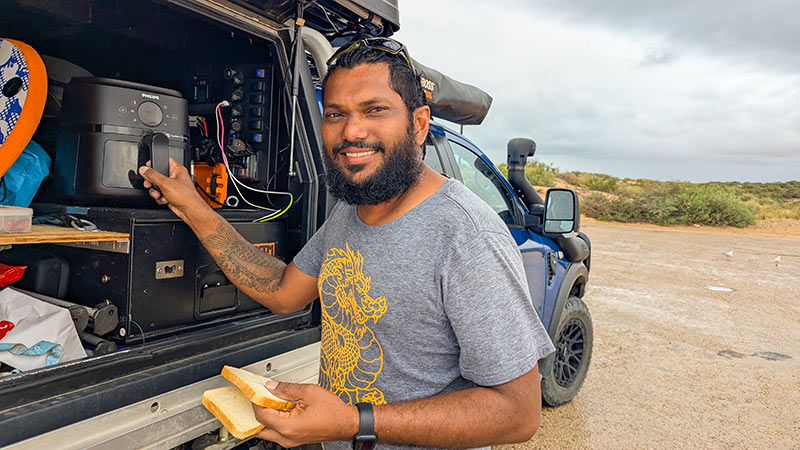
With both setups, I carry a portable solar panel. This works brilliantly to help top up the batteries. Being portable, I can physically move it around throughout the day to catch the best sunlight. I can also use it to recharge the battery in our tow rig, which has a simple auxiliary battery setup of its own.
With our simple system, we have been able to go without plugging into a power supply for months at a time. And not surprisingly, our greatest limiting factor is always water – not power.
The biggest reason as to why we can get away with a smaller electrical system is that we minimise the use of electrical appliances in our caravan. Our fridge runs on gas when off-grid and we don’t have an inverter in the caravan, which can easily and very quickly chew a lot of power. The appliances that use 12V power are the water pump, lights (efficient LEDs), Sirocco fans, the TV, rangehood and USB outlets. We find that we don’t have to calculate how much power we are using as we have never run it low enough to be a worry.
Even if the caravan’s batteries did go flat, the biggest problem would be not being able to use the water pump. We would still have a working fridge and stove, thanks to the gas.
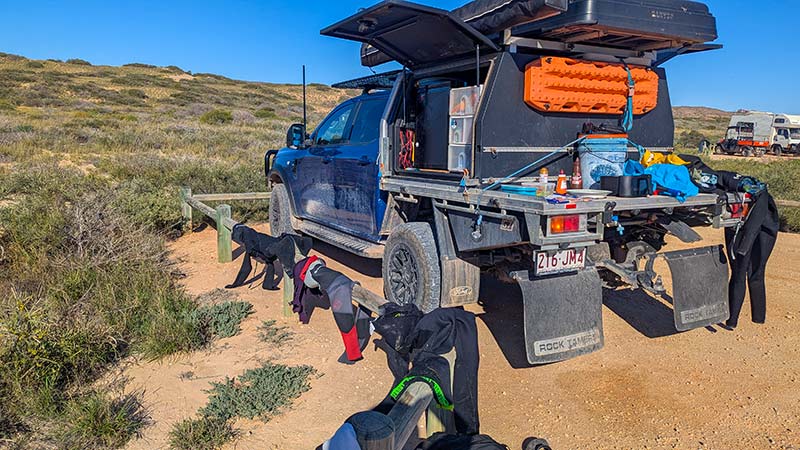
If we ever do need 240V power while off-grid, I rely on my ute, which has its own 12V setup. In the ute is another 200Ah lithium battery as well as a 40A DC-DC charger and a 3000W inverter (which turns the 12V power from the battery to a 240V power supply).
When it came to installing an inverter, I purposely chose to install it into our ute rather than the caravan. The reason: we move the ute much more regularly than the caravan. Every time we drive the ute, we can recharge the auxiliary battery at a rate of 40A per hour. We hook-up the caravan to the inverter, the same as you would at a caravan park, and even though we could use all our appliances, we still use power sparingly, usually just to run the air-fryer or washing machine if near a water resupply point.
I will admit, when I see a great big 12V setup, usually on YouTube, inside a family caravan with many hundreds of amp hours of lithium batteries, ideal solar panel ratio (2W of solar per 1Ah of battery), a big inverter that can run everything in the caravan, the microwave, the air-fryer, even the air-conditioner and a dishwasher, I do say to myself, “Gee, that would be nice.”
But here’s the thing: regardless of your 12V setup, we all end up at and enjoy the same destinations! Happy travels.
– Elvin Pal