

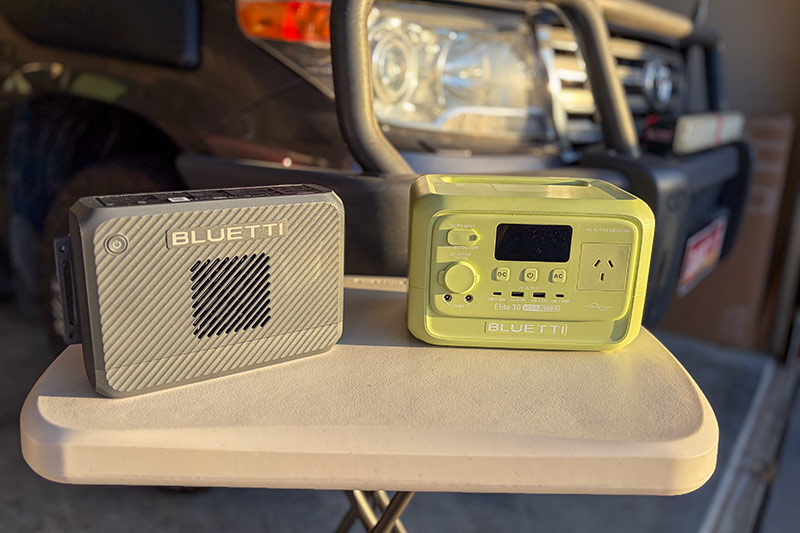
Back in April last year, Max reviewed the Bluetti Charger 1 that he combined with a Bluetti AC70 portable lithium power station. This unit was capable of recharging the AC70 at rates of up to 540W. That is nothing to be sneezed at, considering that it could recharge a 1024Wh Bluetti power station from flat to 100 per cent in about two hours. But as good as that is, the Charger 1 did have a few limitations. Its 540W of charging is not the highest on the market, and if you want to go from car charging to solar, you have to physically unplug Charger 1 from the power station and plug in your solar panel. The new Bluetti Charger 2 addresses both those issues and also introduces functionality not seen before.
Bluetti was kind enough to invite me to participate in its pre-release beta testing group to see just what this new Charger 2 can do.
MORE ALTERNATOR OUTPUT
The new Charger 2 can charge at rates up to 800W when just using input from the car’s alternator. That’s an increase of 260W over the old model and delivers over 30 per cent faster charging. For smaller power stations, that may not be a huge deal, but if you have a unit over 1000Wh in capacity, it’s a welcome change.
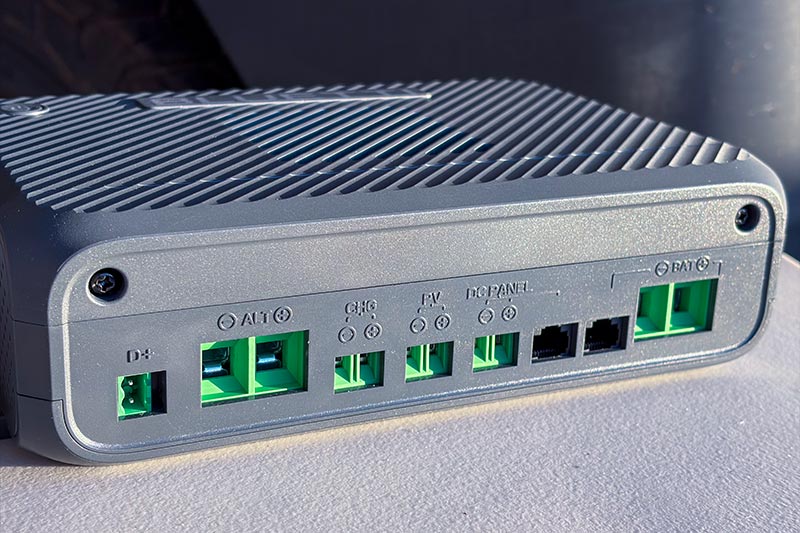
The Charger 2 now provides support for smart alternators by providing a special connection to communicate with the alternator and adjust charging for maximum efficiency.
COMBINED CHARGING
The Charger 2 adds up to 600W of solar panel input that can be combined with alternator input to deliver up to 1200W to recharge your large power stations much faster than ever before. These days, many caravanners will fit a solar panel to their tow vehicles as a permanent fixture, and this can now be incorporated into the Bluetti system seamlessly, without any need to change cables.
The Charger 2 will also allow the solar input to continue charging even with the tow vehicle’s engine switched off. As someone who has used portable power stations extensively, I can say the convenience of this feature cannot be underestimated. In fact, it prompted me to totally reconsider how my tow vehicle electrical system is configured. I can see some rewiring work in my future.
REVERSE CHARGING
The Charger 2 introduces reverse charging of up to 800W through certain Bluetti models. This means if you find yourself with a flat starter battery in your tow vehicle, you can use your Bluetti power station to fast-charge it, getting you back on the road in a short time frame. If you’ve ever come back to your tow vehicle with a flat battery, this will be a welcome piece of mind.
DC HUB SUPPORT
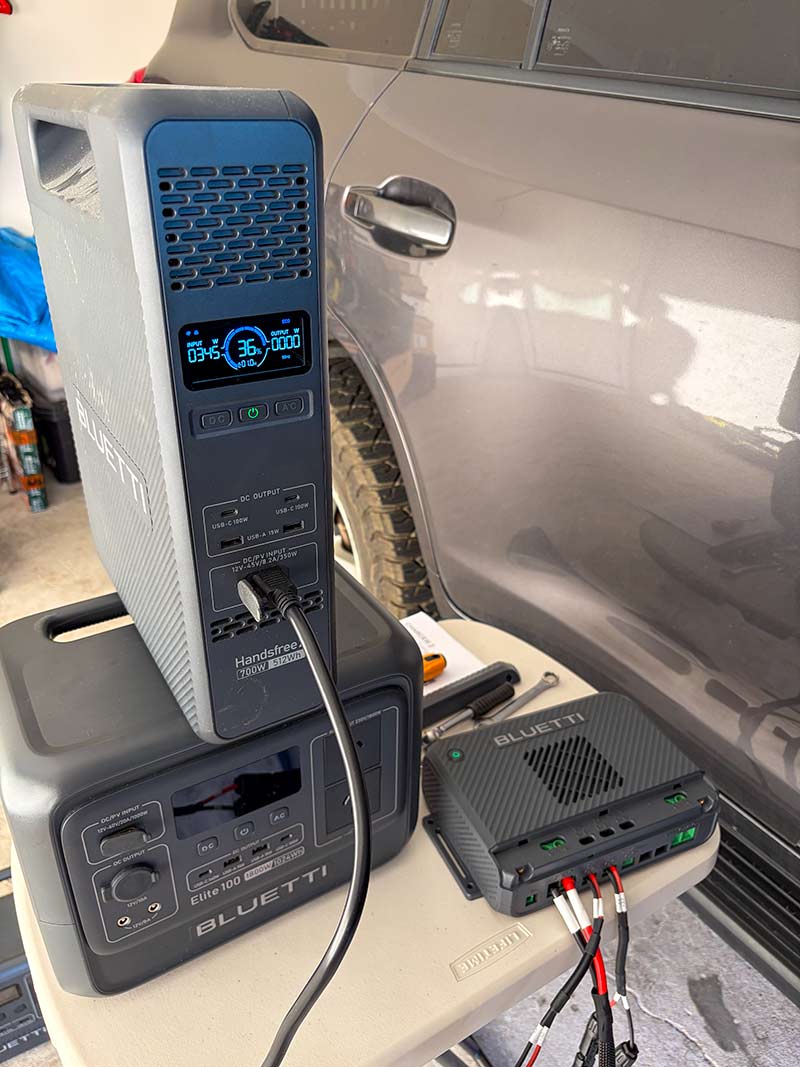
Most portable power stations, Bluetti included, are primarily focused on AC power output, and their DC output has been limited to low-wattage applications. The introduction of the DC Hub now permits powering up to 600W of 12V/24V DC appliances. The DC Hub, available as a separate accessory, features an Anderson Plug output, cigarette lighter, DC5521, USB-C & USB-A ports for multi-device charging.
MULTIPLE DEVICE SUPPORT
The Charger 2 is completely compatible with all Bluetti portable power stations, and it is also compatible with a multitude of other brands thanks to the use of a standard XT-60 connection. This function is supported by the ability to manually set the output voltage to suit the device being charged.
BLUETTI APP SUPPORT
The Charger 2 is totally compatible with Bluetti’s excellent smart device app. In fact, the level of control over all aspects of the Charger 2’s operation is remarkable. Thanks to the app’s WiFi and internet support, you can view system status, track energy use, and manage everything in real time, from anywhere. What’s more, it automatically recognises connected Bluetti power stations and adjusts charging settings without user interaction.
WHAT’S IN THE BOX?
The Bluetti Charger 2 comes with everything you need to connect and mount it to your vehicle and start charging in no time at all. You get the charger itself, heavy-duty battery cable, a 75A main fuse, MC4 input and output cables, XT60 charging cable, a bidirectional charging cable and, of course, a user manual.
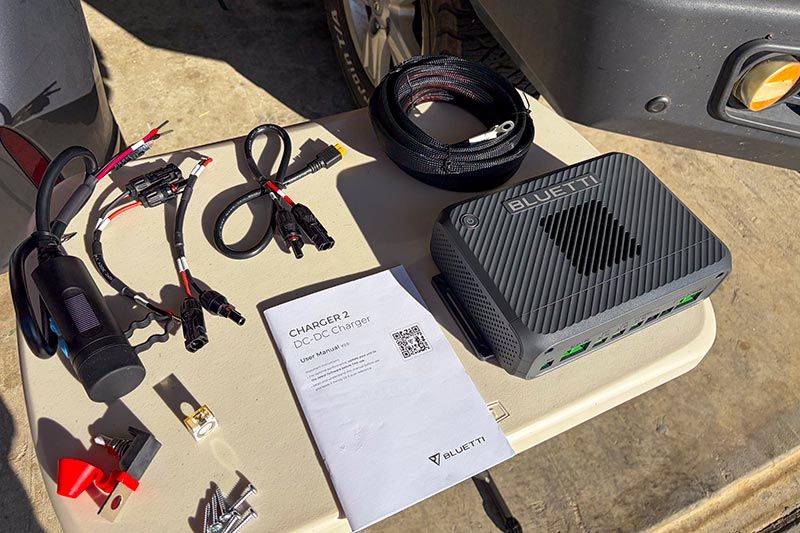
If you own an older Bluetti model with the DC7909 charging port, you will need to purchase that adapter separately.
All the components look to be of excellent quality. I especially like the bootlace ferrules on all the wire connections to the Charger 2. These will ensure good, stable and reliable connections under mobile conditions.
INSTALLATION
The physical installation may take some time to plan and complete, as you will need to figure out the best path to route the main power cable from the engine bay to the power station storage position. That’s the hardest part. The actual connection and setup comprises four steps, and all the connections on the Charger 2 are very clearly marked. I set-up mine on a benchtop in less than 20 minutes.
Setting up the device on the app and connecting it to your power station was also extremely easy and required little interaction from me. You do need to have some knowledge about what you’re doing, but it was one of the simpler devices to configure I’ve used.
I will mention that you do need good connections, especially at the source battery; otherwise, charging performance will be reduced. I found this with the battery connections in my LandCruiser, which are ordinary to say the least!
IS IT EASY TO USE?
The simple answer is yes, but I believe it is a little more complex. If you think about it, a lot is going on with the Charger 2 and the range of configurations available does introduce some complexity, especially for newcomers to this sort of technology.
Fortunately, the user experience is excellent, thanks to the Bluetti app. Not only does it do most of the set-up and control of ongoing functions automatically with little user input, there are also many configuration options available for advanced users to fine-tune their setup to suit their particular needs. If you do run into trouble, Bluetti’s support and online community are always on hand to get you going in the shortest amount of time.
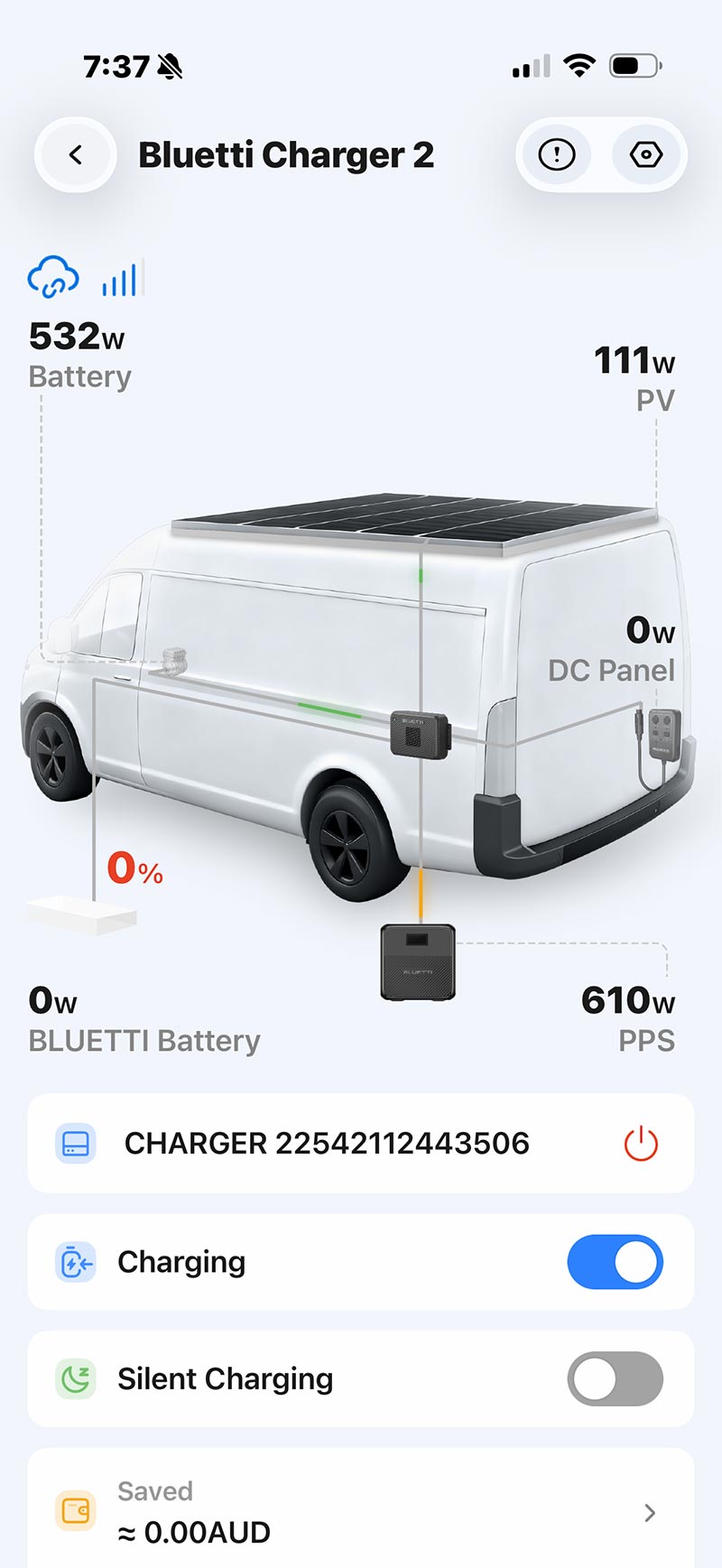
The Charger 2 supports wi-fi connection and the energy statistics in the app. I love these features! You can see exactly how the system is working, where the power is coming from and where it’s going in a clear graphical format.
You can access the Charger 2 remotely over the internet. I’m not sure how useful this will be to the average user, but if you need to monitor the charging function remotely, you could link your Charger 2 to Starlink via the wi-fi router and access your system remotely and change settings as necessary.
DUAL CHARGING
Does the dual charging input actually work? Again, yes is the simple answer. I was only able to get a maximum of 640W of alternator charging, thanks to my slightly dodgy battery connections and the fact that I had other loads running off the alternator as well. The Charger 2 will automatically alter charge input according to the load on the alternator.
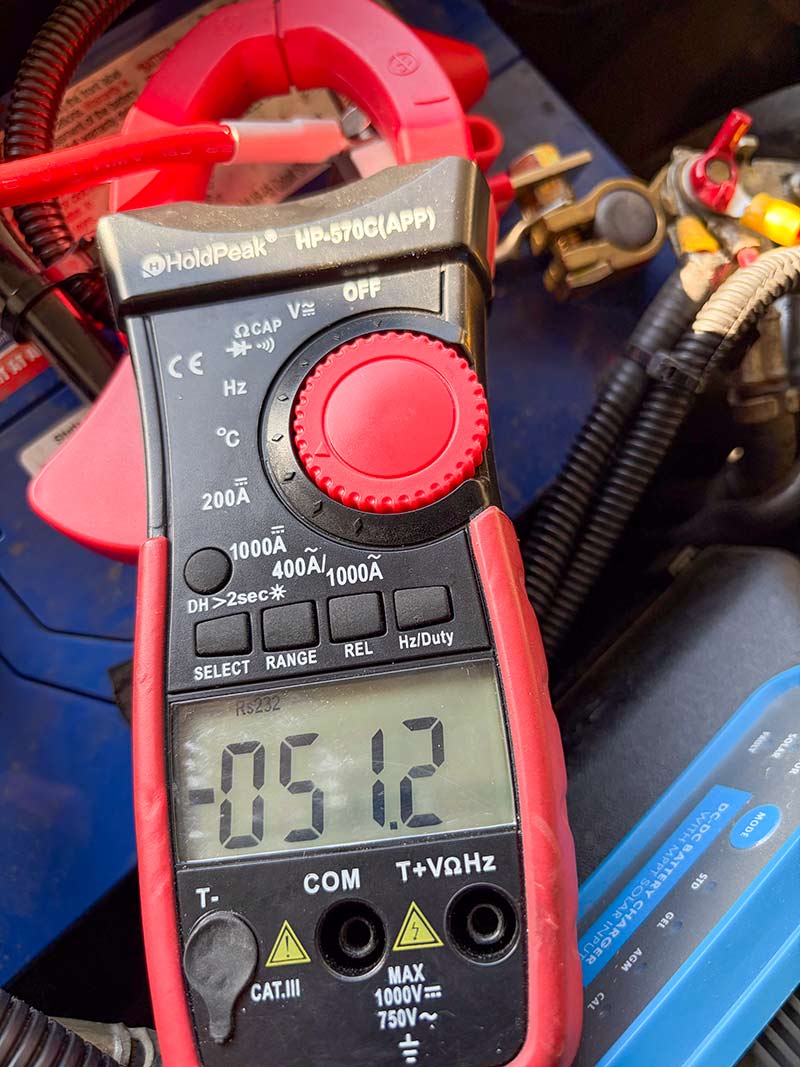 I only had a 200W solar panel, and I was testing the system in the late afternoon. Not ideal for maxing the panel. Still, I managed to get around 110W of solar. This resulted in a combined 750W, which is a pretty good result.
I will be sorting out my connections and trying a larger solar panel later down the track.
A WORD OF CAUTION
Prospective owners of the Charger 2 should consider their existing DC power usage and the loads they could potentially be placing on their alternators.
The Charger 2 can produce a load of around 60A if it is running at its maximum output, and that is a big load for many small vehicles. Further, you may have a dual battery system, driving lights, fridge and other high-power loads already on your tow vehicle. If that wasn’t enough, if you tow a caravan, you’re likely charging the house battery from your tow vehicle as well. All these loads will add up and could potentially put too much load on your car’s charging system. You want to avoid that as much as possible.
I strongly recommend owners consider isolating dual battery systems and caravan charging connections if they know they will be fast charging their power stations through the Charger 2. Or perhaps consider setting a lower charge voltage to minimise the load on the alternator.
WOULD I CHANGE ANYTHING?
\
I believe Bluetti has done a very good job with all aspects of the Charger 2, especially the app support, which is brilliant. But I am not a particular fan of the screen layout. The graphic of the car tends to dominate the screen while the individual data readings are in a small font, making them a bit awkward to read. It’s not a huge issue, but I think it could be refined with later software updates.
IS IT VALUE FOR MONEY?
Absolutely! And I really mean that. The Bluetti Charger 2 retails, at present, for just $599. In my opinion, that’s a bargain. If you look at the competition, the price is on par with other alternator-based chargers with similar output, but the Bluetti adds solar input, higher charge rates, smart alternator support, better device control, and it works with many other brands of solar generators.
The Charger 2 is a huge step up from the original Charger 1, which is an excellent product in its own right and still available. But, when you consider the price difference of just $140, buying the Charger 2 today is a very easy choice to make and represents excellent value for money.