
Georgetown is quiet these days, with tourists passing through in the cooler months and large cattle stations surrounding the town. But this town on the Gulf of Carpenteria was once the site of a gold rush and even played an important role in the Overland Telegraph Station that provided crucial information to Cape York, especially during critical times like World War II. I’ve stayed in Georgetown a few times and found it a great base to set-up and explore the surrounding area.
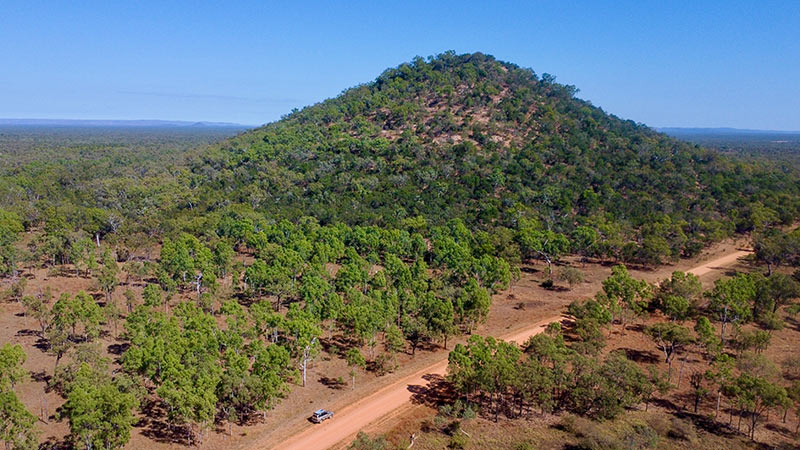
The Ewamian people have called this place home since the Dreamtime. They have native title over an impressive 2.9 million hectares. Covering open plains, rugged mountain areas due to volcanic activity the area has a rich and diverse landscape.
Europeans came through the area as early as 1850 and when gold was found a few years later, there was an influx of nearly 3000 people looking for their fortune. A town was set-up by 1869 with plenty of hotels, a post office, schools and police station.
Unfortunately, the gold was short-lived back then and prospectors moved further north to the Palmer River goldfields in Cape York. It was generally known as a ‘lazy man’s’ goldfield as most gold was found on top of the ground.
Nowadays, many tourists make Georgetown their midway stopover as they travel the Savannah Way. The local information centre, also known as the TerrEstrial Centre has a collection of more than 4500 minerals displayed inside that belong to one Ted Elliott, who collected these minerals and gems from all around the world.
The centre also has pastoral and early history displays, as well as a fascinating section on the local Ewamian people.
In town, there’s a river walk highlighting local trees and a viewing platform when the river is in flood. Just near the local park, an old gold stamper is bolted to the ground where it was used in the late 1800s.
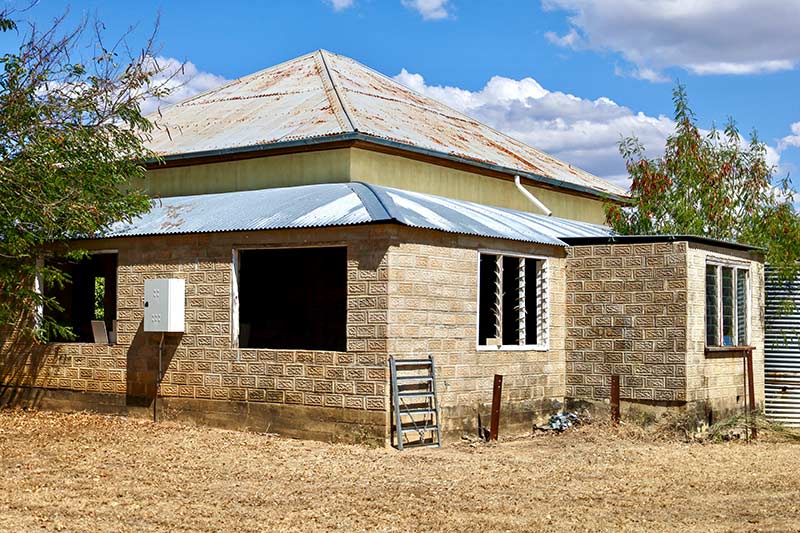
In South Street, an unusual building called the Antbed House was built from bricks that used material from termite mounds.
GEORGETOWN FREE-CAMPING
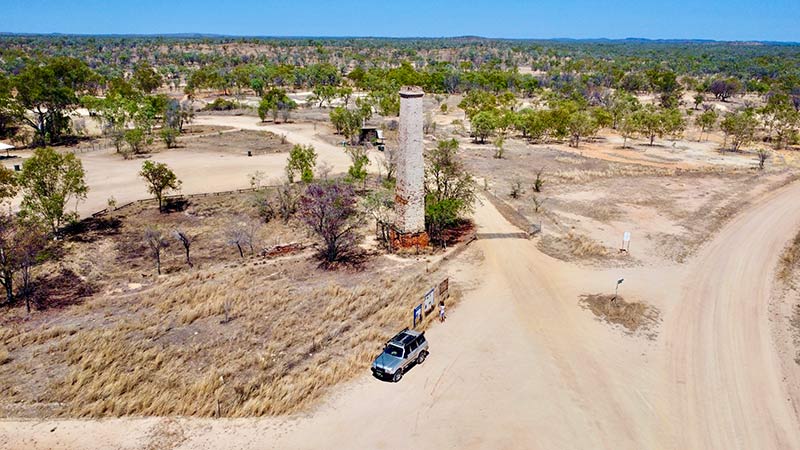
The old Cumberland goldmine site, which was in operation for just under 10 years before finally closing in 1897 due to hardships, sits to the west of Georgetown. A lone chimney stands as a silent reminder as to what used to be.
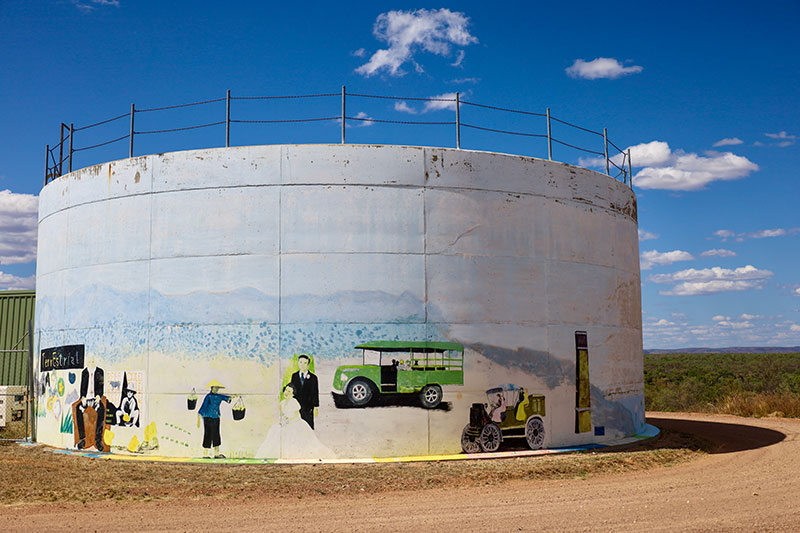
This old site has free-camping beside a dam that was built as the town’s water supply in the late 1800s. With a huge viewing deck, it’s a beautiful place to watch the birdlife, even in drier times. The camping area has bins and information boards for an insight into the mine’s history and more.
The discovery of gold in Georgetown opened up several new areas to the south that included the little town of Forsyth and Einasleigh further east.
These two towns survived a little longer than Georgetown as a rail line was built to move mine material back to Chillagoe for processing.
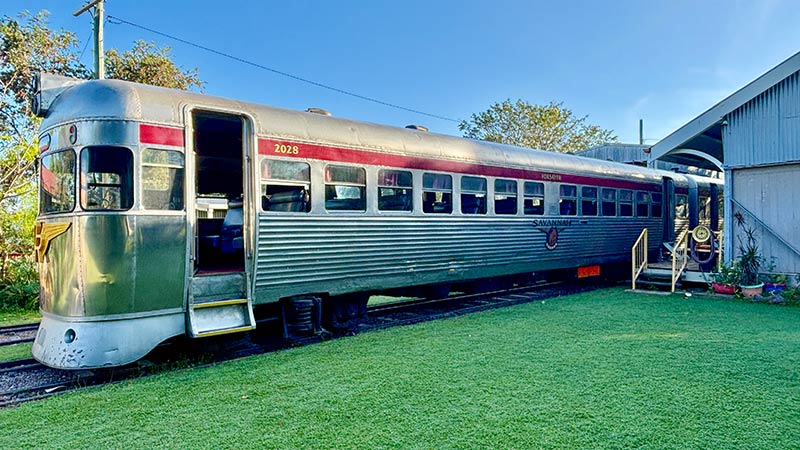
Today, the line is used by the Savannahlander tourist train company, which attracts thousands of visitors a year. Einasleigh once had a large working copper mine but since closure the only surviving building in town is the local hotel, but across the road is the stunning Copperfield Gorge with amazing rock formations created over millions of years.
Probably the most visited tourist location in the area would be Cobbold Gorge, where incredible geological formations have created narrow rivers through rock gorges. Created just 1700 years ago, these gorges have walls up to 30m high. Visitors can take a guided tour to hear just how they formed and how significant they are.
From the outside, Georgetown may seem like a sleepy little town, but it’s what’s in the surrounding area that has many visitors come back year after year. There are station stays and plenty of areas where the die-hard rock and gold fossickers can explore and dig to their heart’s content. It’s definitely worth a stop for a few days.
WHERE IS GEORGETOWN?
Georgetown is situated on the Gulf Developmental Road, which links Cairns 380km to the east and Normanton 300km to the west. It is located on the Etheridge River.
WHAT TO SEE AND DO
Georgetown is a great place to set-up base for a few days to explore surrounding natural highlights, local history or to try your hand at fossicking.
To the south there’s the stunning Cobbold and Copperfield gorges, the town of Forsyth and the lone pub at Einasleigh.
Visit the Georgetown Information Centre for all travel information throughout the area.
More information: https://drivenorthqueensland.com.au/listing/product/georgetown-visitor-centre-terrestrial/