
If someone had told me a couple of months ago that we would be paying over $3 per litre for diesel, I reckon I would have told them they were mad. The most I think I had ever paid for diesel was $2.60, and that was in a very remote part of the country. Today, that would be cheap!
The truth is, the war in Iran and the subsequent closing of the Strait of Hormuz have done a lot more than just send the price of fuel through the roof. It has demonstrated that despite our isolation from the rest of the world, we are still very vulnerable to events happening on the other side of the globe.
So, what can we, the caravanners of Australia, do to lessen the effects of this crisis on our beloved pastime? As it turns out, there is plenty we can do. Here are five ways to reduce your fuel consumption and five ways to save money when you need to refill the tank.
REDUCING CONSUMPTION
1. Slow down. I know what a lot of our readers will be thinking. Apart from being bleedingly obvious, caravanners are often criticised for driving too slowly in the first place. Won’t this just lead to more frustration towards caravanners?
Well, my theory is this. It doesn’t matter how fast you drive; everyone on the road will want to get past you regardless. In fact, I would argue that other drivers take more risks getting past you when you’re doing the speed limit. So, you may as well back off, drive a little slower and enjoy the savings.
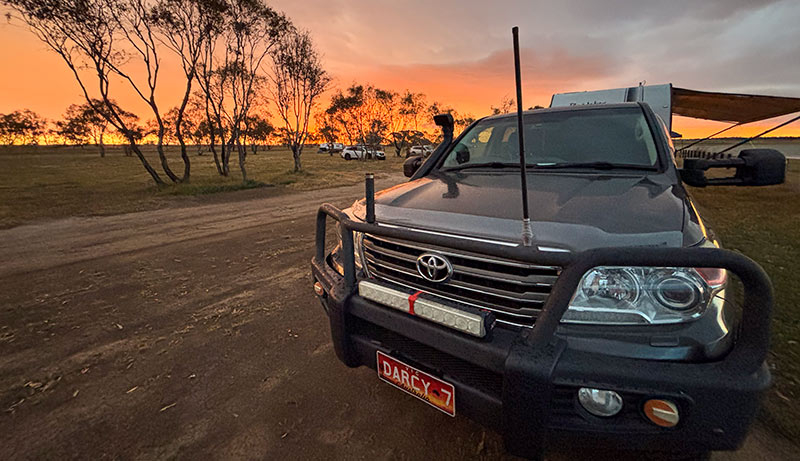
The theory is that the faster you drive, the more power is required to overcome additional drag, wind resistance and friction, which in turn consumes more fuel. I know for a fact that my 200 Series Land Cruiser towing our 3.5t caravan can use 4-5L/100km less fuel while maintaining a speed of 80km/h compared to a speed of 100km/h.
Now, I’m not suggesting you do 80km/h everywhere as you will be a source of frustration, but if you’re on a long stretch of road with plenty of overtaking opportunities and you’re not in any hurry to get to where you’re going, why not back off the loud pedal a bit and save a bit of fuel?
2. Reduce your load. Again, this is another tip that a lot of readers will say is obvious, but I know many caravanners carry a lot of gear they simply do not need. I was one of them for a very long time. The problem was that I was completely oblivious to how much stuff we had accumulated over time until we bought a new caravan and had to transfer all the gear from one to the other. I was horrified!
A good tip is marking every item you use over a period of six months. At the end of that time, go through all your gear again and anything without a mark on it, consider getting rid of. If you haven’t needed it in six months, chances are you won’t need it at all.
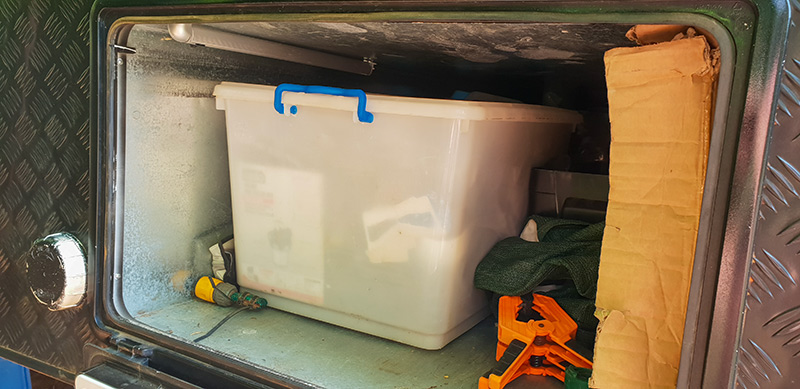
That said, there’s one item that many caravanners carry that adds more weight than just about anything else. It’s water. I cannot believe how many caravanners travel with their water tanks filled to the brim, and they are not doing any free camping. It’s astonishing! Every litre of water weighs 1kg, so your 90L water tank, when full, weighs 90kg. Multiply that by two or three tanks, and you could be lugging around 270kg for no good reason.
3. Avoid driving into headwinds. Anyone who has crossed the Nullarbor more than a few times will tell you that fuel consumption on that stretch of road can vary significantly every time, and it is a dead straight and flat road. The difference is almost always the direction and strength of the wind. The Eyre Highway traverses a section of the land that is exposed to the winds of the Southern Ocean. Get a 20-30km/h headwind and watch your fuel consumption go through the roof.
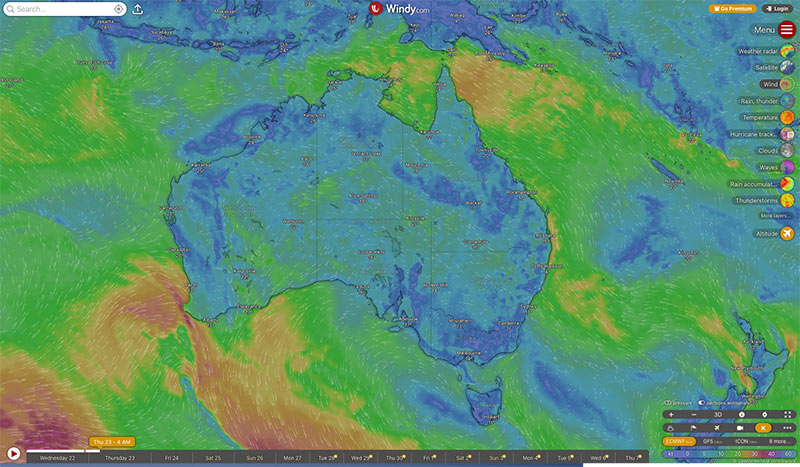
The best way to avoid driving into headwinds is to use a weather app such as Windy.com and have a look at the wind predictions over your route for the days ahead. If it shows you’ll be experiencing head winds, perhaps consider postponing your drive until the winds die down or change direction.
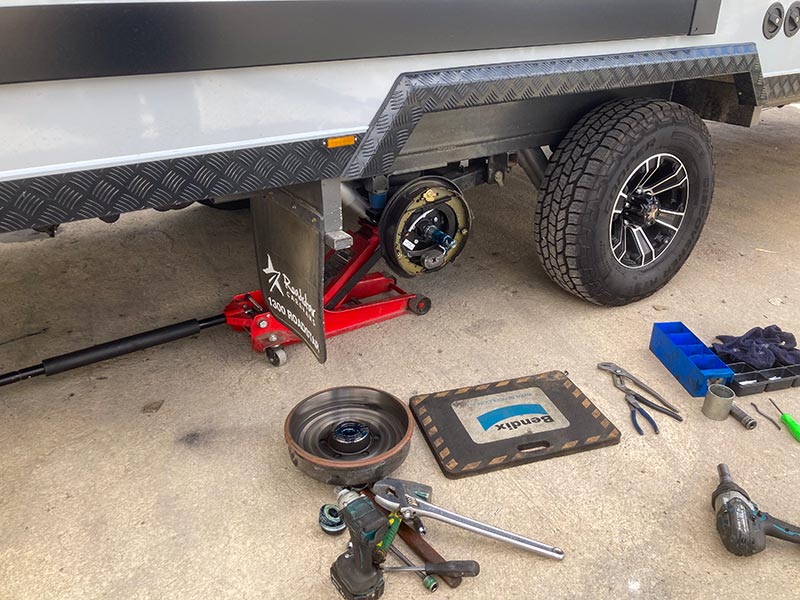
4. Pump up your tyres. I would wager that around 90 per cent of caravanners are driving around on severely under-inflated tyres on both their car and caravan. There would be several reasons for this, but most likely it would be due to a complete misunderstanding of the tyre pressures listed on the tyre placard or compliance plate of the two vehicles. These pressures are for when the vehicle is almost empty. As you add more weight to the vehicle, the tyres will sag, increasing the area in contact with the road. This increases friction and rolling resistance, leading to increased fuel consumption and possibly poor handling.
Every tyre has a load-to-pressure table listed on the sidewall. Have a look for yours when you get a free moment. You’ll be surprised to know just how much pressure they need in order to safely carry a set load. Most popular light truck tyres can be pumped up to 80psi at the limit of their load-carrying capacity.
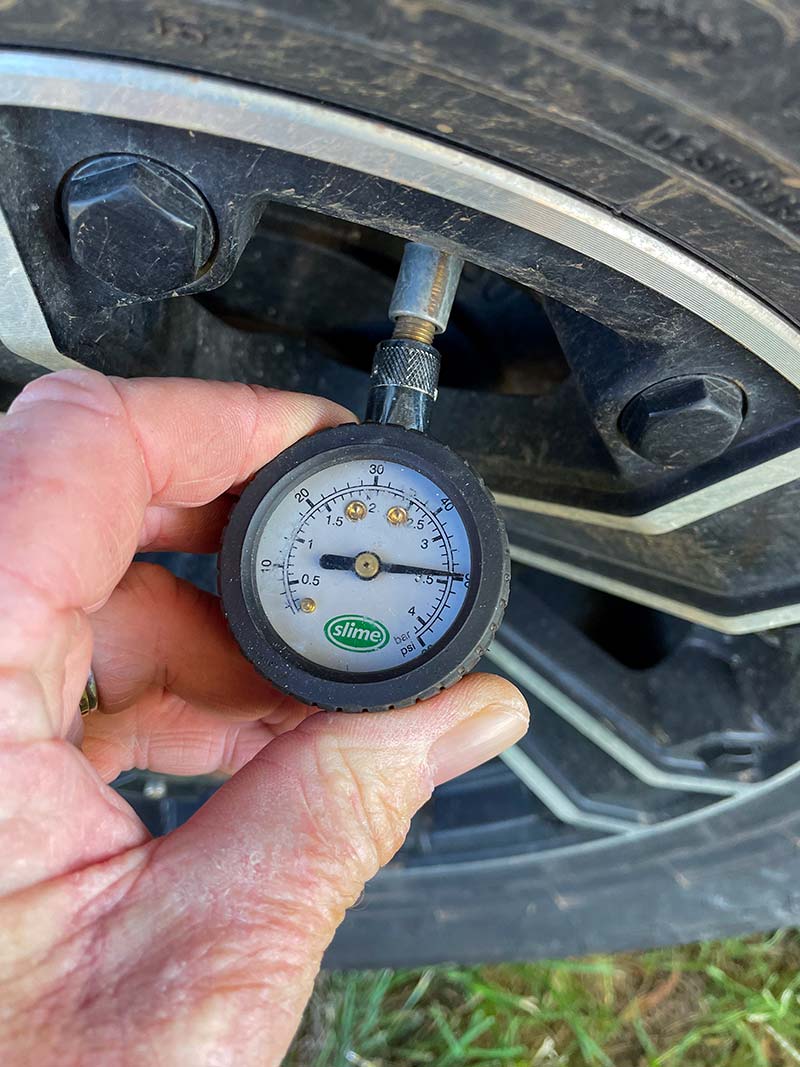
I’m not suggesting you go and pump up yours to that level, at least not without getting your rig weighed to see if you have that much weight on each wheel. But I would be comfortable saying if your caravan is close to its maximum weight, your tyres will need to be inflated to around the 50-60psi mark.
5. Look far ahead when driving. When I was teaching volunteers in the SES to drive under emergency conditions, I would use a technique called commentative driving. Basically, I would get the student to tell me what he/she is seeing while driving and how they are anticipating obstacles and dangers. What I found was that most drivers did not look more than about 10ft in front of the bonnet of their cars. Not only is it a dangerous way to drive, but it also means you don’t anticipate things like hills and corners, making driving very reactive.
By scanning along the left side of the road, up towards the horizon and back down the right side of the road, you get a much better picture of what is ahead. You can anticipate hills and gradually accelerate so that you’re at speed before you start to climb.
You can slow down well before you get to a sharp bend. Your driving becomes much smoother, and you use much less fuel. You will also anticipate hazards with sufficient reaction time to avoid a disaster.
CHEAPER FUEL
- Take advantage of your fuel discount schemes. Whether it’s your favourite grocery store chain, your state motor vehicle club membership or any number of fuel discount schemes, find out what you have and take advantage of them. You’ll be surprised at how much you can save. For instance, some fuel station chains will accept multiple discounts per transaction. I recently saved nearly $30 filling up our Land Cruiser by combining Woolworth’s and RACV discounts and applying accumulated Woolworths savings at the same time.
- Use fuel tracking apps and websites like Petrol Spy and FuelMap Australia to find the cheapest fuel in the area. Seriously, you would be very surprised by the difference there is between fuel stations, all literally within walking distance of each other. While researching for this article, I noticed a difference of up to 50 cents per litre in the price of diesel in many cities and even remote towns across Australia.
- Ask the park manager. If you’re staying in a caravan park, have a chat to the park manager about where to find the cheapest fuel. Sometimes they may have an arrangement where park guests can get a discount on fuel at a particular fuel station in town, or they may know where the locals go to get their fuel. You lose nothing by asking.
- Buy fuel at the right time during the fuel price cycle. You will have noticed that the price for fuel tends to increase right before the weekend. This is no coincidence; however, it may not be for the reason you think. Petrol prices move up and down in almost regular patterns in all of Australia’s capital cities. Picking the right time to buy fuel is the trick. The ACCC monitors the petrol industry, and the Petrol and Fuel section of its website has all the information you need to pick the right time to buy fuel, wherever you are.
- Buy truck diesel rather than ‘special’ diesel. I have often wondered what the difference is between the cheaper diesel in the truck bays compared to the supposedly special diesel you get at the car pump. I’ve heard that the truck diesel is lower quality or has fewer cleaning agents than the stuff they sell for regular cars. This cannot be true. Truckies need their vehicles to support their livelihood. They travel huge distances hauling heavy loads in all conditions. You really think they are going to put the crappy fuel into their trucks? Of course not.
In fact, I put this question to Copiliot AI, and this is what it said:
Truck diesel is specifically engineered for heavy-duty vehicles such as tractor-trailers, construction equipment, and large commercial trucks, providing enhanced power, lubricity, and performance for long-distance hauling and heavy loads. Regular diesel, also called auto diesel, is intended for passenger cars, SUVs, and light-duty trucks, with lower cetane ratings and less lubricity, suitable for smaller engines.
I think I know which fuel I’d rather use in my Land Cruiser and I’ll save a few dollars along the way! Safe travels.
Got a tip for saving fuel? Why not share it with our readers? Send your tips and ideas to info@GoRV.com.au