

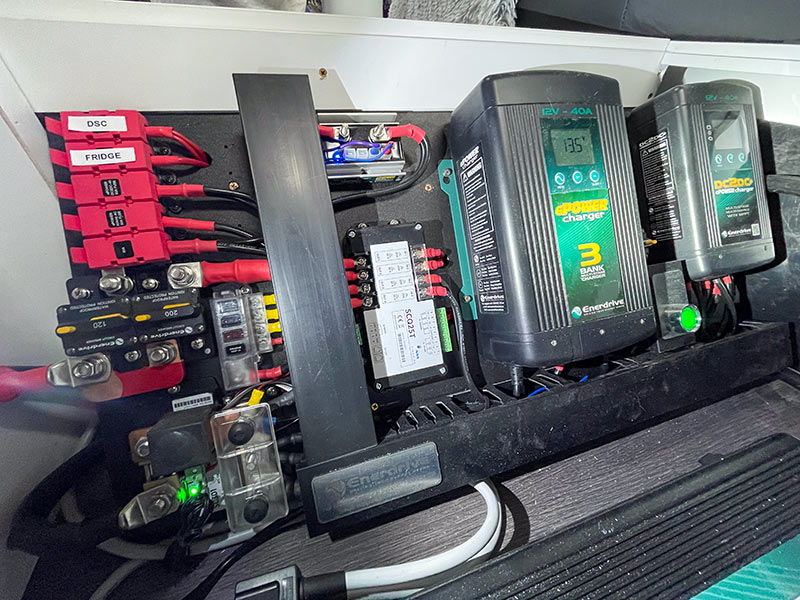
If you buy a new van, the chances are it will have a comprehensive but also complicated electrical system. High-capacity lithium batteries, large solar arrays and high-wattage inverters that were rare 10 years ago are now standard fare. For the vast majority of these RVs, the electrical system will be designed and installed by professionals using high-quality components. Unfortunately, that is not always the case.
Similarly, if you buy a second-hand caravan or camper, the chances are the electrical system will have no resemblance to whatever system it came out of the factory with. And who knows what sort of components were used to expand the system or how competent the installer was.
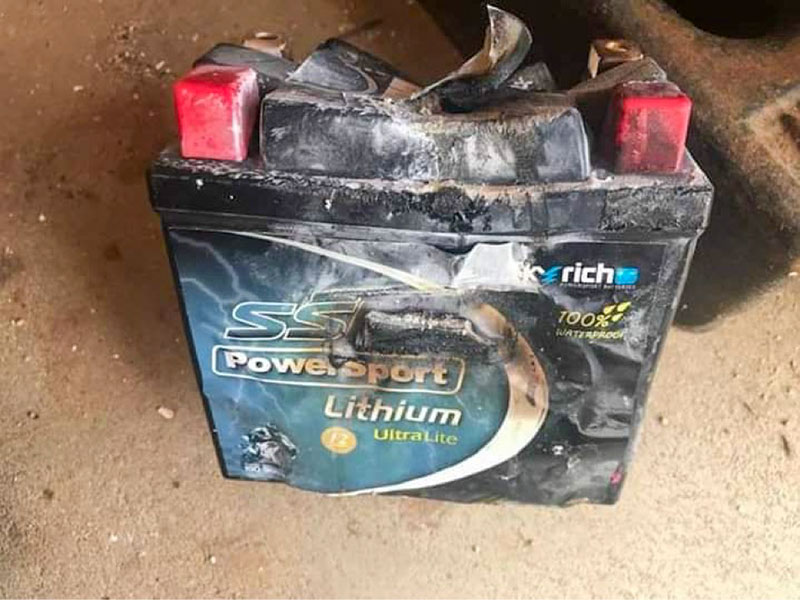
Now you might be sitting there thinking, “So what? It’s only 12V. How dangerous can it possibly be?” Well, you only have to spend a few minutes on any caravan and camping group on Facebook to see that even a small electrical issue can result in, at the very least, an expensive repair bill, or at the other end of the scale, a devastating fire.
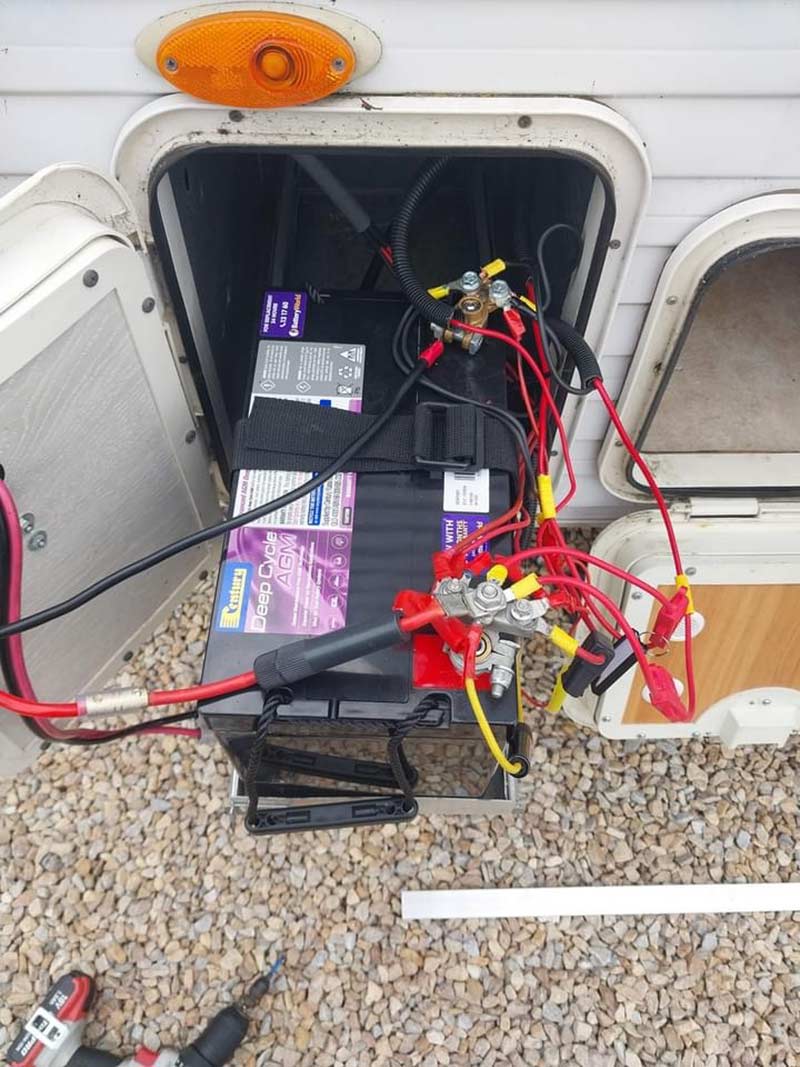
So, what are the sorts of things we should look out for when assessing how safe our electrical system is? Here are five things I see regularly on my Facebook groups that are easy to identify and don’t have to cost a fortune to rectify.
1. CHEAP COMPONENTS
I don’t know how many times I’ve said this in articles I’ve written over the years, but it must be said again: you get what you pay for. This is especially true with the various components used in 12V electrical systems.
Take lithium batteries, for example. Their proliferation and popularity in recent years have spawned a vast industry of literally thousands of manufacturers, all with differing quality and prices. Do a Google search for a 100Ah battery and you’ll see the prices range from around $200 all the way up to $2200. I’m not saying you must spend at the highest end of the price spectrum to get a good battery. If you shop around, you’ll see the majority are priced between $400 and $1000. There are even a few well-known and respected name brands in that price range.
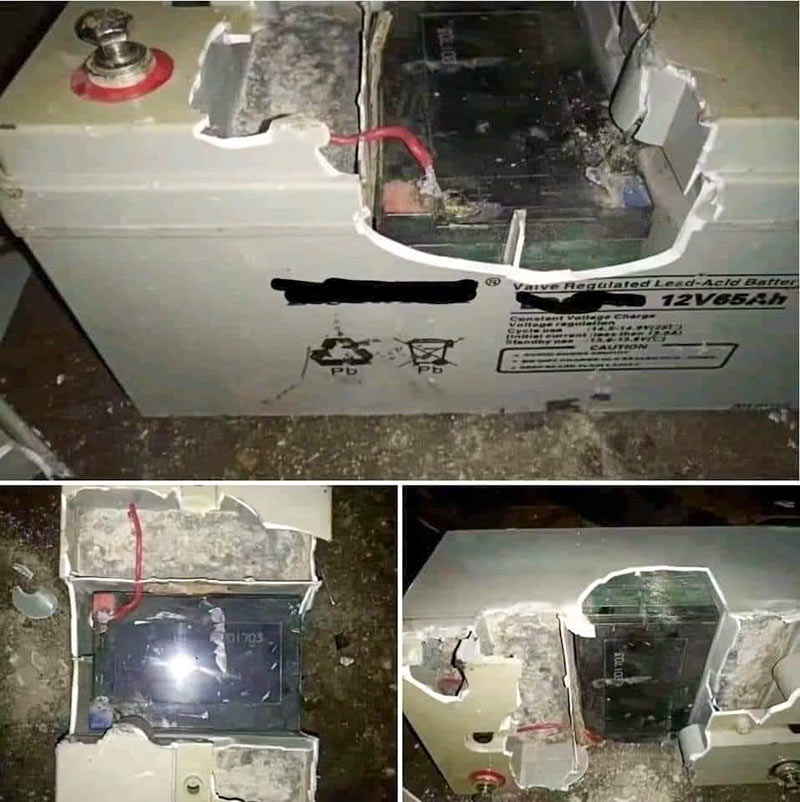
The issue extends well beyond batteries. Take solar controllers as another example, where a cheap controller is likely to be rubbish.
Search for 30A solar controllers and you’ll see prices range from as low as $15 to over $100. Now, you may well be tempted to go for the $15 option, but I can tell you there is one very popular unit in that price range where there is little to no difference between the 10A and the 30A option. Imagine how dangerous that could be if it was connected to a solar array capable of producing 30A.
2. IN-LINE FUSES
A few years ago, I was having trouble running a fridge in the back of my car. For ages, I thought it was a battery issue. Then I thought the fridge was faulty, but a new fridge didn’t resolve the issue. I put up with it until one day I was discussing it with a mate of mine who is quite knowledgeable about 12V electrics. He suggested we try running the fridge directly off the battery to see if it worked.
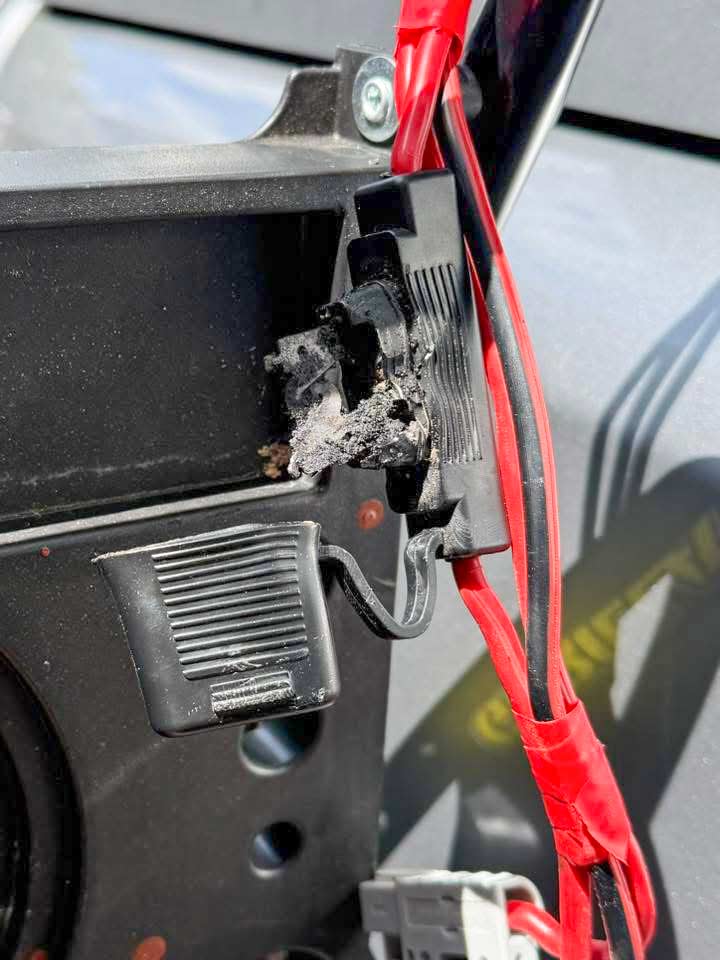
Why I didn’t think of this is beyond me. In any case, the fridge worked perfectly, indicating an issue with the power wiring. I tore apart the rear of the car and found an in-line fuse that had melted to the point it was creating a lot of heat and resistance. The fuse itself had not blown. It’s a wonder it didn’t catch fire.
Since then, I’ve seen dozens of cases where these inline blade fuse holders have failed in exactly the same way. It doesn’t seem to be restricted to any particular brand. The worrying thing is just how many manufacturers and installers use these holders.
I also believe the origin of the fuse can have a lot to do with the issue. If you purchase cheap fuses from online sources, they could be hopelessly inadequate. I’m almost certain the fuse I had in my system was purchased as part of a pack from a dodgy $2 shop.
3. POOR CRIMPING
It seems just about every 12V electrical connection in a modern caravan will be done with a crimped connection of some description. It’s no surprise, given they are cheap, easy to assemble with the right tools, and, if done correctly, extremely reliable. It’s important to check yours as many cablers and DIYers somehow manage to get it wrong to the point that they become dangerous.
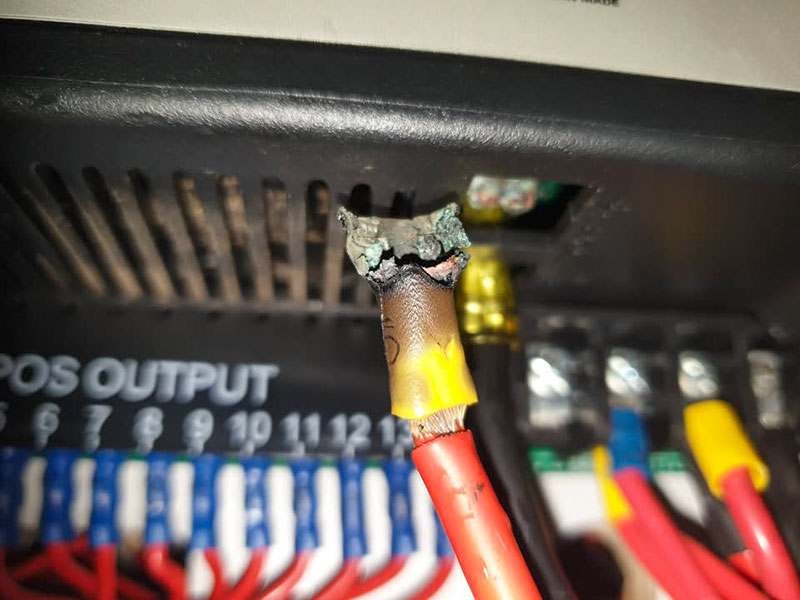
There are tell-tale signs that the crimps have been done poorly. Exposed wiring, loose connections and damaged insulation on the connections are commonly seen issues. These lead to many of the same problems we’ve already talked about. Poor connections can lead to resistance, which builds heat. Damaged insulation and exposed wiring can cause short circuits, especially if there are a lot of wires packed together in an enclosed space.
Unfortunately, many of these poor crimps can go unnoticed, and it’s only when they fail that problems manifest. If you do manage to see any obvious signs of poor crimping, get a qualified auto electrician to inspect your system and rectify as necessary.
4. INADEQUATE WIRING
12V electrical systems use DC electricity. It means the electrical current travels from the positive terminal of the battery, through the positive wires, into the appliance and back to the negative terminal of the battery through the earth wires. Depending on the size of the van, how long the wires are between the battery and the appliance, the distance can be longer than you may imagine.
As the electricity travels along the wire, resistance in the wire causes the voltage to drop. For low-power devices, this isn’t a huge issue, but for high-power devices like fridges, light bars and inverters, this resistance can cause all manner of problems. To cope with the high power demands, as the amps rise and the distance lengthens, the wire needs to be thicker or a heavier gauge. The more copper per meter, the less resistance.
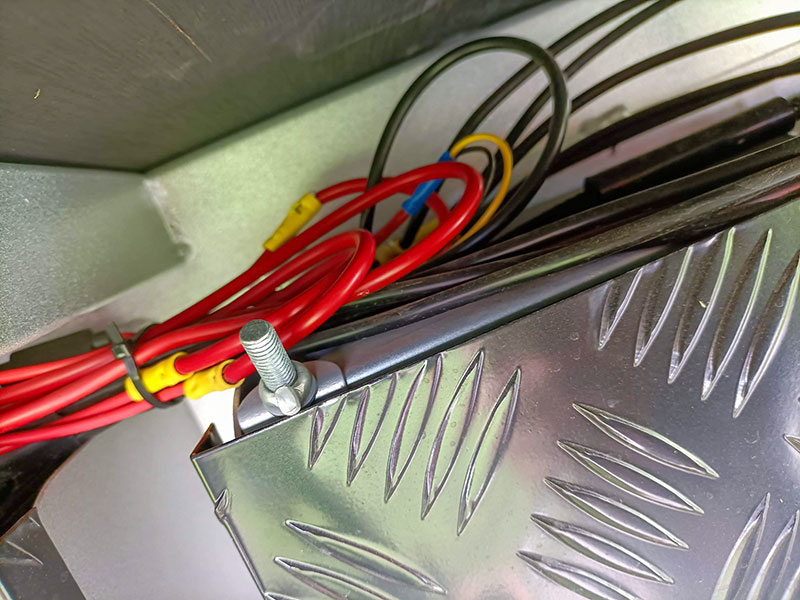
There are charts available online that can tell an installer what gauge wire to use for any given number of amps over any given distance. This one on the Enerdrive website is an excellent example.
On this site you can see that if you need to power a device that draws, say, 10A, that is 5m away from the battery, that’s a total wire length of 10m, requiring 2.59mm diameter cable to keep the voltage drop below 10 per cent. If the appliance is critical, say a fridge, you may want to keep the voltage drop to just three per cent. For that, you’ll need cabling that is 3.26mm in diameter.
10A is not a lot, and any inadequate wiring is not likely to cause any serious risks, but consider if you have an inverter in your caravan. As an example, if a 2500W inverter is run at its maximum, it will pull close to 250A from your battery. That is a lot of amps, and if the wiring is unable to cope with that current, it could heat up very quickly to the point of melting the copper, potentially leading to a fire or, at least, an expensive repair bill.
5. POOR ELECTRICAL CONNECTIONS
This is probably the most common issue with caravan electrical systems because it covers a multitude of sins. Too many connectors on a single terminal, mixed metal contacts, corroded or tarnished connectors and bare wires in clamp-style terminals are just some of what we see on our Facebook groups.
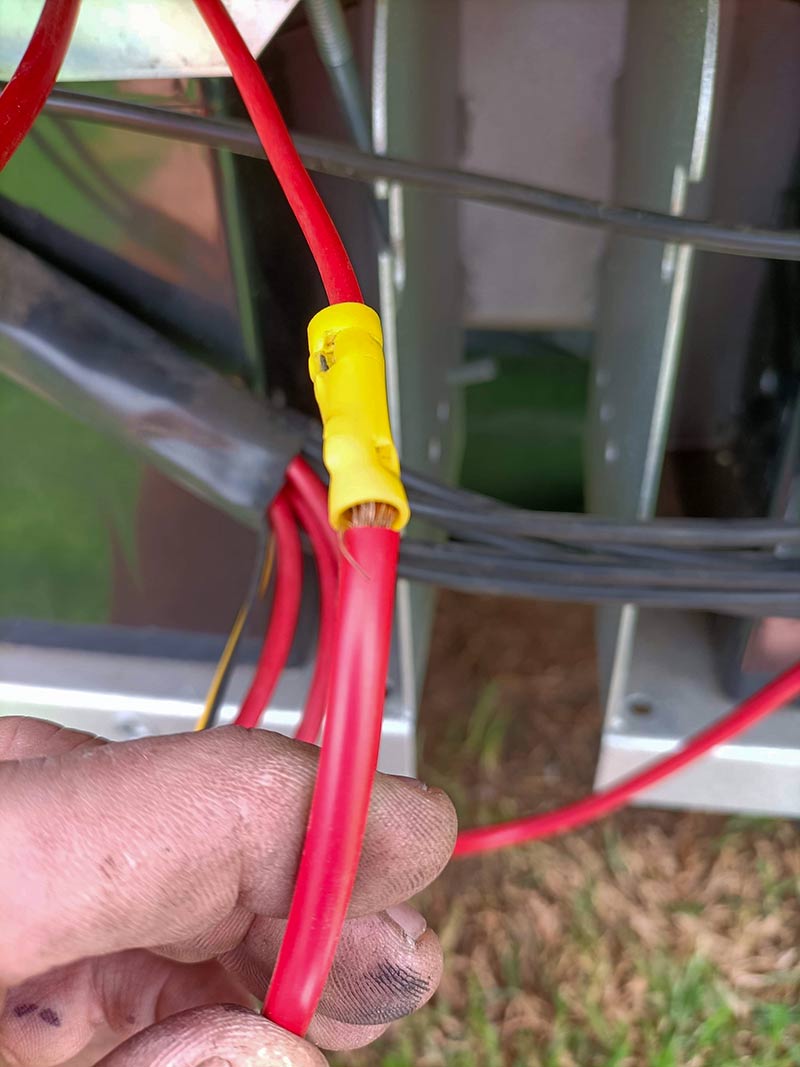
While you could possibly forgive the DIYer for not knowing that some of these issues can cause problems, it is unforgivable for an electrician or manufacturer to make customers pay for this sort of sloppy work.
If you have too many connections on a single terminal, it is nearly impossible to get enough tension to prevent it from loosening over time. When different metals come into contact with each other and moisture is present, electrolysis can occur. This can cause tarnishing of the surfaces, which in turn causes resistance. In severe cases, the metal can corrode and break away.
If you use bare wires in the connections of, say, a solar controller, the terminals can work loose over time. This can lead to arcing and carbon build-up. All of these issues will cause resistance and heat and, in extreme cases, fire.
So what can you do about all of this?
Before you buy a new RV, ask the manufacturer what brand of system they are installing. If it’s a well-known name brand with local support in Australia, you’re probably going to get good value and high reliability.
Have a good look at the electrical system, and if it looks neat and organised, it is a good sign someone has taken pride in their work to build a reliable system. If it looks like a bird’s nest, I would look elsewhere.
If you’re buying a second-hand caravan, unless you know what you’re looking for or have some knowledge of 12V electrical systems, I would have the van inspected by a qualified electrician before you head off on that lap around Australia.